Te Reo Māori Videos!
Jump to:
ā (and)a and o categoriesa as a personal particleactive sentencesadjectivesahakoaāhuaaiai meaning "habitually"akeaku, ō, anaanekeanōāta (carefully)atucategorising sentencescolourscommandsconjunctionsdual pronounse... ana as a subclausee hia?ēngarifamily relationshipsfuture tensegreetingshaerehehe aha?hei (future)heoi anōhokii as a past tense markerihoi tei to indicate directioni to mark the object of the sentencekakai-kāorekatoakēkei as a locativekei hea? i hea?kei tekīki to indicare directionki to mark the object of the sentencekokonei, konā, korāko tēhea?ko wai?mā for future possessionmaimātoumāuameamōnā... i...negating possessivesnounsnumbers and countingobjects in a sentencepast tensepeapēnei, pēna, pērapersonal pronounspluralspossessivespreposed particlespronounciationquestionsrāneirāuarawa atusubjects in a sentencetaku, tō, tanatāuatēnei, tēnā, tērā, ēnei, ēnā, ērātētahi, ētahitinotōna, tānatonuunrealised possession
ā (and)
#32: Rangi was sick but now he is well
conjunctions: ēngari, ā
A conjunction joins two phrases together to make a longer sentence. In te reo Māori, two common conjunctions are ā (and) and engari (but)
.
a and o categories
#51: Our tomato is red
All the singular personal possessives in the a and o categories
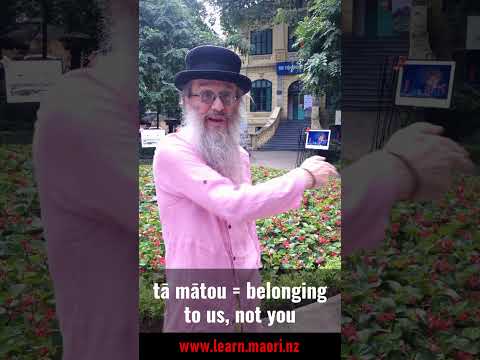
Possessive pronouns in the a category correspond to the 11 personal pronouns. The forms are tāku, tāu, tāna, tā tāua, tā māua, tā kōrua, tā rāua, tā tātou, tā mātou, tā koutou, tā rātou. They indicate possession of a-category items such as food, work, pets, or created things, matching the person or group involved.
a as a personal particle
#28: Rangi is reading the book
a - personal particle

Using 'a' as a personal article before a name.
#29: I love you
use of a before personal pronouns

ki a au, ki a koe, but not ki a ahau.
active sentences
#13: That person is going
kei te with verbs
In Māori, kei te marks the present tense (action happening now). Verbs like oma (run) or waiata (sing) never change form—unlike English. The same structure forms questions (Kei te waiata koe?). Tense is shown by markers before the verb, not by altering the verb itself.
Kei te haere ahau.
Kei te oma ahau.
Kei te hīkoi ahau.
Kei te waiata ahau.
Kei te tū ahau.
Kei te noho ahau.
Kei te kai ahau.
Kei te ako ahau.
Kei te pānui ahau.
Kei te tuhituhi ahau.
Kei te tākaro ahau.
Kei te tangi ahau.
Kei te moe ahau.
Kei te patu ahau.
Kei te piki ahau.
Kei te kata ahau.
Kei te pakipaki ahau.
Kei te kite ahau.
#16: The dog is running
kei te + verb + noun
Simple sentences in the present tense with a verb and a noun as a subject.
Kei te haere te wahine.
Kei te haere te kōtiro.
#17: The big man is crying
nouns + adjectives

Simple sentences with a noun and an adjective. Unlike in English, the adjective follows the noun (the house big, the cer red). For example: "Kei te oma te tāne nui" (the big man is running).
Kei te tangi te tane nui.
Kei te waiata te wahine kaha.
Kei te auau te kurī kino.
Auau, kino
#98: I am being eaten by the cake.
i and e in active and passive sentences
In Māori, i marks the object in active sentences, e.g., Kei te kai ahau i te keke (“I am eating the cake”). i is not used in commands or passive sentences. In passive sentences, the person performing the action (the agent) is marked with e, e.g., Kei te kainga te keke e au (“The cake is being eaten by me”).
#159: Rangi ate the cake. The cake was eaten by Rangi. If was Rangi who ate the cake.
active, passive, agent emphatic and stative sentences
Te reo Māori has four structures: active (subject acts, object with i/ki), passive (object as subject, verb suffix, agent with e), agent-emphatic (highlights doer with nā/mā), and stative (no suffix, agent with i, subject affected). Tenses apply across all. Key difference: passive uses e, stative uses i for the agent.
#162: The children broke the window
active, passive and stative sentences

In Māori, pakaru (stative) takes the broken thing as subject, with the agent marked by i (e.g., Kua pakaru te matapihi i ngā tamariki). The active verb pākaru uses i for the object, while its passive form uses e and suffix -tia.
adjectives
#7: I'm good
kei te with adjectives

Kei te means "at the moment". It can be used with an adjective to say how you are now. "Kei te pai" means "at the moment, I am well", and "kei te ora koe" means "you are well now".
Kei te pai ahau.
Kei te pai au.
Kei te pai koe?
Kei te ora ia.
Kei te ngenge ahau.
#8: I'm tired
adjectives

What an adjective is. Kei te ora ahau (I am well(. Kei te ngenge ahau (I am tired).
Kei te ora ahau.
Kei te ngenge ahau.
Kei te kaha ahau.
Kei te wera ahau.
#10: You are all beautiful
koutou
More adjectives. Using koe with an adjective. Kei te ātaahua koe.
Personal pronouns: ahau, koe, koutou.
Kei te āwangawanga ahau.
Kei te whakamā ahau.
Kei te hōhā ahau.
Kei te ātaahua ahau.
Kei te pai koe.
Kei te ātaahua koutou.
Kei te hōhā koutou.
#11: I am hungry and tired
hiakai, hiamoe
Kei te hiamoe ahau.
Kei te hiakai ngā tamariki.
Kei te hiainu te kurī.
#17: The big man is crying
nouns + adjectives
Simple sentences with a noun and an adjective. Unlike in English, the adjective follows the noun (the house big, the cer red). For example: "Kei te oma te tāne nui" (the big man is running).
Kei te tangi te tane nui.
Kei te waiata te wahine kaha.
Kei te auau te kurī kino.
Auau, kino
#172: The bad big wolf
Two adjectives for the same thing

In Māori, adjectives cannot precede a noun in a string. Instead, repeat the noun or use mea ("thing") to avoid repetition: He kurī pango, he mea nui (the black dog, the big thing). For a second adjective, add hoki ("also"): He tangata mōmona, māngere hoki ia (a fat, lazy man).
ahakoa
#114: Although it is raining, we are going to the beach
ahakoa
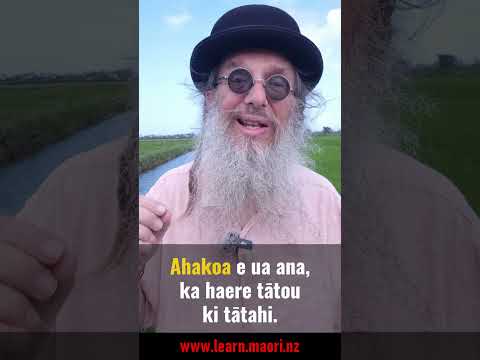
In te reo Māori, ahakoa means “although” and links two ideas where the second is true despite expectations created by the first. It introduces a surprising contrast. For example: Ahakoa e ua ana, ka haere tātou ki te tātahi — although it is raining, we will go to the beach. It can appear at the start or in the middle of a sentence.
āhua
#9: I'm very sick
tino, āhua

Use of tino and ahua to mean "very" and "somewhat".
"Kei te tino pai" means "I am very well and "Kei te āhua ora koe" means "you are somewhat well".
Kei te tino pai ahau.
Kei te āhua pai ahau.
Kei te tino māuiui ia
Kei te āhua māuiui ia.
ai
#64: She is always swimming in the sea
Use of "ai" as habitual action

The particle ai can indicate habitual or regular action when it appears after the verb near the beginning of a sentence. It shows that something happens repeatedly or all the time, such as Kōrero ai tērā tāne (“That man is always talking”) or Hīkoi ai a Aroha ki te kura (“Aroha always walks to school”).
ai meaning "habitually"
#64: She is always swimming in the sea
Use of "ai" as habitual action
The particle ai can indicate habitual or regular action when it appears after the verb near the beginning of a sentence. It shows that something happens repeatedly or all the time, such as Kōrero ai tērā tāne (“That man is always talking”) or Hīkoi ai a Aroha ki te kura (“Aroha always walks to school”).
#148: I habitually go to the supermarket in order to buy food
Ai
The Māori particle ai has two key uses: marking habitual actions (e.g., Kōrero ai ia – she always talks) and indicating purpose or reason (ki te hoko ai – in order to buy). It also forms why questions (He aha ai?) and negative why didn’t/won’t questions using i kore ai or e kore ai.
ake
#15: I'm coming. You're going.
haere mai, haere atu

Direction markers: ake (up), atu (away), iho (down) and mai (towards the speaker).
#173: Trump is more bad than Obama
ake, atu, iho
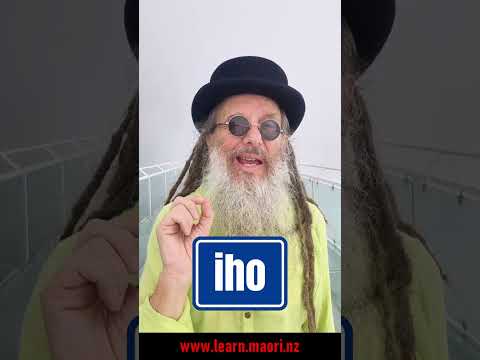
Comparatives use ake (up) for “more” (better/bigger) and iho (down) for “less/smaller/worse”. Use i to introduce the thing compared. Note: kino ake is common for “worse”, but strictly it’s kino iho—though this can sound ambiguous, so rephrasing is safer.
aku, ō, ana
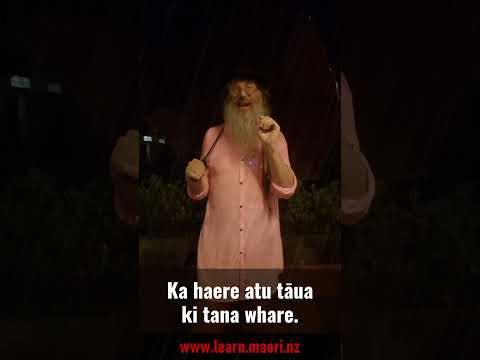
#43: We are going to his house
Neutral plural possessives: aku, o and ana.
aneke
#179: All the children only the lollies
anake, katoa
"Anake" means "alone" or "only" and directly follows the word it modifies. Moving it changes meaning (e.g., "only sang" vs. "only Rangi" vs. "only one song"). It contrasts with "katoa" (all), as shown in examples like "only the women worked" versus "all the women worked."
anō
#182: Perhaps she will be happy again
pea, tērā pea, anō
Anō means "again" and marks repeated actions, while tonu means "still" for ongoing states. Pea expresses uncertainty ("perhaps") and can follow nearly any word—verbs, nouns, adjectives, or agents. With numbers it means "approximately." Pea cannot start a sentence; use Tērā pea instead.
āta (carefully)
#186: Lift the baby carefully so you don't hurt her!
āta... kei...
Āta marks that an action is done carefully or slowly, and it typically accompanies passive verb forms. The particle kei introduces a warning of a potential negative outcome. In passive commands with āta, the object follows directly without the preposition i, while the kei clause spells out the risk to avoid.
atu
#15: I'm coming. You're going.
haere mai, haere atu
Direction markers: ake (up), atu (away), iho (down) and mai (towards the speaker).
#173: Trump is more bad than Obama
ake, atu, iho
Comparatives use ake (up) for “more” (better/bigger) and iho (down) for “less/smaller/worse”. Use i to introduce the thing compared. Note: kino ake is common for “worse”, but strictly it’s kino iho—though this can sound ambiguous, so rephrasing is safer.
categorising sentences
#39: This is a motorbike
categorizing sentences with "he"

Sentences that start with he are called "categorizing sentences" and put something into a class or category. For example "he pene tēnei" means "this is a pen", or, literally "in the category of pen this is".
#40: Rangi is sad now but is a happy person
the difference between kei te to show temporary situation and he to show characteristic
colours
#41: That motorbike is yellow
colours
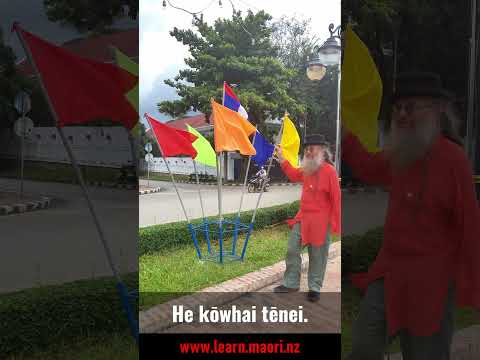
#50: Our car is yellow

Possession with groups uses the personal pronouns with tā (a-category) or tō (o-category). For example, tō tātou whare means “our house” (belonging to all of us), and tō rāua whare means “their house” (belonging to those two). If two people share something but not the listener, we use tō māua, as in tō māua waka (“our car, not yours”).
commands
#93: Tidy your room!
commands using the passive
In te reo Māori, commands are often formed using the passive imperative, where a passive suffix such as -hia, -tia, or -a is added to the verb (e.g., Tapahia ngā huawhenua – “Chop the vegetables”). These instructions are common in recipes, classrooms, and homes. In command sentences, the object does not take i. This structure is widely used for everyday instructions.
conjunctions
#32: Rangi was sick but now he is well
conjunctions: ēngari, ā
A conjunction joins two phrases together to make a longer sentence. In te reo Māori, two common conjunctions are ā (and) and engari (but)
.
dual pronouns
#30: We two (not you) are going
māua, tāua, rāua

Dual pronouncs: me, not you; you and me, those two, you two.
e... ana as a subclause
#62: Have you heard the bird that is singing in the morning?
e... ana as a subclause
E … ana can appear in a subclause to describe an action connected to a noun. The clause adds extra information, similar to “who is…” or “that is…” in English. For example, te wahine e waiata ana means “the woman who is singing,” adding detail about the person or thing being described.
e hia?
#87: How many pens are there?
e hia?
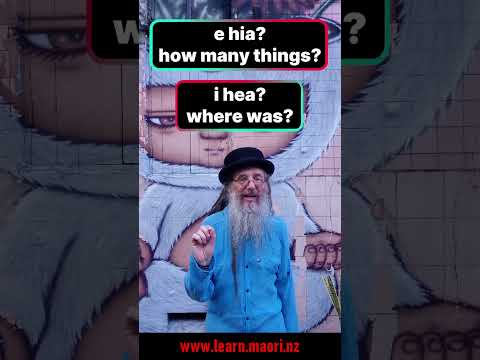
i hea? asks where something was (location in the past). E hia? asks how many things there are, while tokohia? asks how many people there are. The difference is subtle: i signals past location, whereas e relates to counting numbers. The similar sounds make them easy to confuse.
ēngari
#32: Rangi was sick but now he is well
conjunctions: ēngari, ā
A conjunction joins two phrases together to make a longer sentence. In te reo Māori, two common conjunctions are ā (and) and engari (but)
.
family relationships
#44: The brother was walking to the sister
Older and younger siblings, brothers and sisters

future tense
#34: The students listened and learned
ka as a future tense marker
greetings
#1: Hello
kia ora

You can say hello to someone say "kia ora".
"Kia" is a mild imperative or a command, encouraging someone to be a certain way. Ora is the world for healthy or well, and so "kia ora" means "may you be well!"
Kia ora!
Kia kaha!
#2: Hello friend!
kia ora e hoa

In Māori, e is a particle of address used when speaking directly to someone, so you say Kia ora e hoa! (Hello friend!), not Kia ora hoa. Particles like e are small but tricky words with multiple meanings depending on context, making them a key challenge in learning te reo.
Kia ora e hoa!
E tū!
E noho!
E koro.
E kui.
E whaea.
E tama.
E hine.
E kō.
E kare.
#3: Hello friends!
kia ora e hoa mā
Greeting more than one person using mā.
Kia ora e hoa mā!
Kia ora tamariki mā!
#4: Hello sir!
tēnā koe

Use of tēnā koe as a more formal greeting than kia ora.
Tēnā koe!
Tēnā koutou.
Tēnā koutout katoa.
#5: Hello to all of you!
koutou

The plural personal pronoun koutou.
Tēnā koutou!
#6: Goodbye!
haere rā, e noho rā

Saying goodbye - if you are leaving or staying.
Haere rā!
E noho rā!
haere
#15: I'm coming. You're going.
haere mai, haere atu
Direction markers: ake (up), atu (away), iho (down) and mai (towards the speaker).
he
#39: This is a motorbike
categorizing sentences with "he"
Sentences that start with he are called "categorizing sentences" and put something into a class or category. For example "he pene tēnei" means "this is a pen", or, literally "in the category of pen this is".
#40: Rangi is sad now but is a happy person
the difference between kei te to show temporary situation and he to show characteristic
#45: I have a cup of tea
Possession using he... taku

In te reo Māori, He X ahau means “I am X,” not “I have X.”
To say “I have,” you must use possessives like tāku (one thing) and āku (more than one).
Some people and family words also change in the plural by lengthening the vowel, like tuakana → tuākana.
#67: Tararua is a mountain (ko)
Ko versus he

Ko emphasises the noun that follows it. It works like bold or vocal stress in English, highlighting the key identity of something. For example, Ko kuri tēnei stresses that it is a dog, not something else. The emphasis falls on the word that follows ko.
#68: Colonel Musard in the ballroom wirh the dagger
He versus ko
Statements identifying something must begin with he or ko. He classifies something within a category (e.g., He pukapuka tēnei – this is a book). Ko emphasises or identifies a specific item (e.g., Ko tāku pukapuka tēnei – this is my book). The ko construction highlights or singles out the item being referred to.
he aha?
#82: Why will their dog eat our cat's food?
he aha ___ e ___ ai?

To ask why, different structures mark tense. He aha … i … ai? asks why something happened (past) or what caused something happening now. He aha … e … ai? asks why something will happen (future). The particles i and e signal past and future causes within these “why” questions.
#83: Why are the children laughing?
He aha ____ e ____ nei?

Several structures ask why. He aha ai? is a general “why?”. He aha … i … ai? asks why something happened, referring to a past cause. He aha … e … ai? asks why something will happen. For present situations, He aha … e … nei? asks what is happening right now to cause the action.
hei (future)
#190: Jude will have our food
hei
"Hei" marks the future locative (where someone/something will be), contrasting with present kei and past i. Used with a for personal possession (hei a Jude = will be with Jude). It indicates future location, not purpose—distinct from mā (for the benefit/consumption of).
#198: In order to
hei

Hei indicates purpose ("in order to") or role/function ("as"). It follows the main verb, requires the same subject in both clauses, and cannot be used with passive verbs.
heoi anō
#107: The children are eating, however their food is not healthy
on the other hand, however, heoi anō
In te reo Māori, conjunctions connect clauses to form longer sentences. Common conjunctions include ā (“and”), engari (“but”), and heoi anō (“however” or “on the other hand”). These link positive and negative statements, contrast ideas, or add additional information. Heoi anō often introduces a contrasting point similar to “however.”
hoki
#177: The really happy fish will indeed return
hoki
When hoki means "also" or "and," it always comes immediately after the word or phrase it adds to the statement. It can follow nouns to include an additional person or thing, verbs to add an extra action, adjectives to add another quality, or even entire clauses to connect related ideas. In every case, hoki simply attaches to whatever is being included, making it a versatile way to say "too" or "as well" across all parts of speech.
i as a past tense marker
#31: The family were playing the game
past tense using i and i te
iho
#15: I'm coming. You're going.
haere mai, haere atu
Direction markers: ake (up), atu (away), iho (down) and mai (towards the speaker).
#173: Trump is more bad than Obama
ake, atu, iho
Comparatives use ake (up) for “more” (better/bigger) and iho (down) for “less/smaller/worse”. Use i to introduce the thing compared. Note: kino ake is common for “worse”, but strictly it’s kino iho—though this can sound ambiguous, so rephrasing is safer.
i te
#31: The family were playing the game
past tense using i and i te
#33: I am going, I was going, I went.
past tense: i te

i to indicate direction
#23: The children are running from the house to the school
i to Indicate direction from
Indicating direction from using i.
Kei te hīkoi ahau i te whare ki te toa.
Kei te taraiwa te wahine i te kura ki te hokomaha.
#26: The children are running in or through the house
i meanig in or through or by

#27: I am reading the book to the children in the house
i and ki in the same sentence

We can have both i and ki in the same sentence. (I am reading the book to the children, the woman is singing the song to the people.)
Kei te pānui ahau i te pukapuka ki ngā tamariki i te ruma moe.
Kei te waiata te wahone i te waiata ki ngā tāngata i te whare.
i to mark the object of the sentence
#24: I am reading the book
i to identify the object of the sentence

The object of a sentence (a book being read, a cake being eaten) is marked by "i" in a sentence.
Kei te kai ahau i te keke.
Kei te pānui a Rangi i te pukapuka.
ka
#34: The students listened and learned
ka as a future tense marker
#35: The children played and then they learned
ka as a past tense marker
kai-
#165: The person who causes things to come and go
whaka and kai as suffixes
In Māori, prefix whaka adds 'cause to be/do' or 'turn into' to adjectives, statives, verbs, and nouns (whakaora = heal; whakakōwhatu = petrify). Prefix kai marks a doer (kaiako = teacher). Combined kaiwhaka- means 'one who causes' (kaiwhakahaere = manager; kaiwhakawhānau = midwife).
kāore
#128: I don't have any dogs, you don't have any dogs, they don't have any dogs
kāore āku, kāore ā rāua, kāore ā tātou, kāore ā rātou, etc
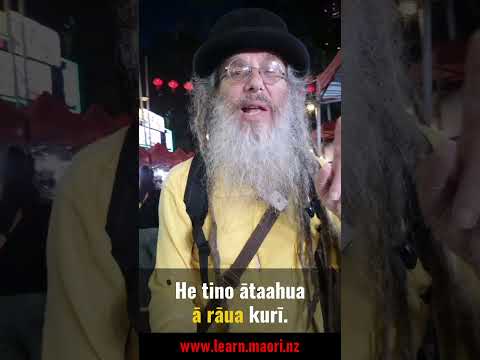
Kāore + possessive expresses not having or owning something. Use kāore + ā/ō + pronoun + noun, depending on the a/ō category. The ā/ō is required before pronouns, and the noun is typically plural. For example: kāore ā rāua kurī — those two don’t have any dogs.
katoa
#10: You are all beautiful
koutou
More adjectives. Using koe with an adjective. Kei te ātaahua koe.
Personal pronouns: ahau, koe, koutou.
Kei te āwangawanga ahau.
Kei te whakamā ahau.
Kei te hōhā ahau.
Kei te ātaahua ahau.
Kei te pai koe.
Kei te ātaahua koutou.
Kei te hōhā koutou.
#179: All the children only the lollies
anake, katoa
"Anake" means "alone" or "only" and directly follows the word it modifies. Moving it changes meaning (e.g., "only sang" vs. "only Rangi" vs. "only one song"). It contrasts with "katoa" (all), as shown in examples like "only the women worked" versus "all the women worked."
kē
#180: Your hair is weird
kē
The Māori particle "kē" marks deviation from expectations in four ways: unexpected timing ("already"), contrary action ("instead"), surprising categorization (e.g., unusual strength), or departure from the norm (strange/extraordinary). Its translation depends on context—ranging from neutral surprise to compliment or mild criticism.
#181: I actually like vegetables
kē
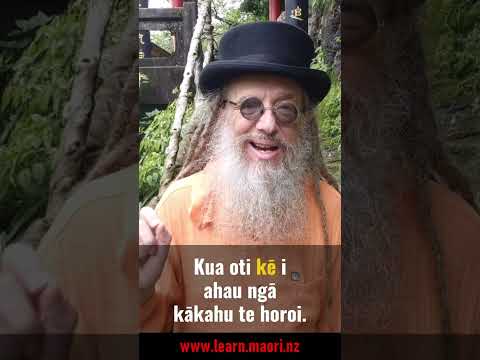
"Kē" in te reo Māori signals contrast or unexpectedness. It means "instead," "actually," or "contrary to expectations." It can indicate a different location, an unexpected preference (like vegetables over lollies), a surprising action, or doing something in place of another activity.
kei as a locative
#71: I am supermarketing
Kei as a locative

Kei hea is used to ask where someone or something is. The reply keeps kei and replaces hea with the location, such as Kei te hokomaha ahau. The phrase kei te is locative in origin, meaning someone is located at a place or activity, which explains forms like kei te kōrero ia (I am located at the talking.)
#73: The cat is on the table
kei runga

Kei hea asks where something is. Simple answers give a location, but more precise descriptions use locatives such as runga (on), raro (under), mua (in front of), muri (behind), or mauī/matau (left/right). These sentences identify the object and then specify its position relative to something else.
kei hea? i hea?
#72: Where were the children?
Kei hea? I hea?

Questions follow a pattern where the question word is replaced by the answer. Ko wai asks who, he aha asks what, and kei hea asks where. The answer keeps the same structure: kei for present location and i for past location. Possessives or place names can specify the location.
kei te
#7: I'm good
kei te with adjectives
Kei te means "at the moment". It can be used with an adjective to say how you are now. "Kei te pai" means "at the moment, I am well", and "kei te ora koe" means "you are well now".
Kei te pai ahau.
Kei te pai au.
Kei te pai koe?
Kei te ora ia.
Kei te ngenge ahau.
#13: That person is going
kei te with verbs
In Māori, kei te marks the present tense (action happening now). Verbs like oma (run) or waiata (sing) never change form—unlike English. The same structure forms questions (Kei te waiata koe?). Tense is shown by markers before the verb, not by altering the verb itself.
Kei te haere ahau.
Kei te oma ahau.
Kei te hīkoi ahau.
Kei te waiata ahau.
Kei te tū ahau.
Kei te noho ahau.
Kei te kai ahau.
Kei te ako ahau.
Kei te pānui ahau.
Kei te tuhituhi ahau.
Kei te tākaro ahau.
Kei te tangi ahau.
Kei te moe ahau.
Kei te patu ahau.
Kei te piki ahau.
Kei te kata ahau.
Kei te pakipaki ahau.
Kei te kite ahau.
#15: I'm coming. You're going.
haere mai, haere atu
Direction markers: ake (up), atu (away), iho (down) and mai (towards the speaker).
#16: The dog is running
kei te + verb + noun
Simple sentences in the present tense with a verb and a noun as a subject.
Kei te haere te wahine.
Kei te haere te kōtiro.
#17: The big man is crying
nouns + adjectives
Simple sentences with a noun and an adjective. Unlike in English, the adjective follows the noun (the house big, the cer red). For example: "Kei te oma te tāne nui" (the big man is running).
Kei te tangi te tane nui.
Kei te waiata te wahine kaha.
Kei te auau te kurī kino.
Auau, kino
#24: I am reading the book
i to identify the object of the sentence
The object of a sentence (a book being read, a cake being eaten) is marked by "i" in a sentence.
Kei te kai ahau i te keke.
Kei te pānui a Rangi i te pukapuka.
#40: Rangi is sad now but is a happy person
the difference between kei te to show temporary situation and he to show characteristic
kī
#117: He said, she said
kī, mea
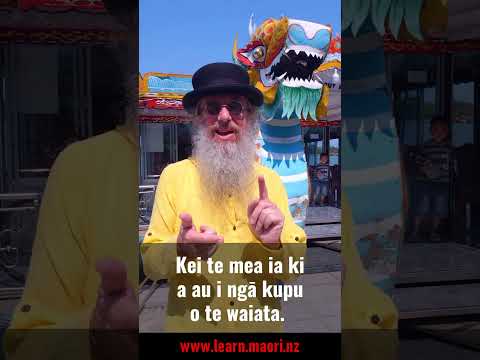
In te reo Māori there are three common ways to talk about speaking: kōrero, mea, and kī. Kōrero describes the act of speaking without stating what was said. Mea reports what someone said indirectly. Kī is used to quote a person’s exact words. The word kī (with a macron) differs from ki (without one). The phrase e ai ki means “according to” and introduces reported sources, opinions, or traditional sayings.
ki to indicare direction
#22: The bird is flying to the tree
ki to indicate direction towards
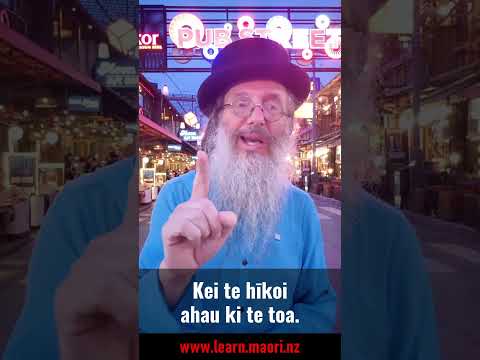
Using ki to indicate direction.
Kei te haere ahau ki te toa.
Kei te hīkoi ahau ki te hokomaha.
Kei te taraiwa ahau ki te tāone.
#27: I am reading the book to the children in the house
i and ki in the same sentence
We can have both i and ki in the same sentence. (I am reading the book to the children, the woman is singing the song to the people.)
Kei te pānui ahau i te pukapuka ki ngā tamariki i te ruma moe.
Kei te waiata te wahone i te waiata ki ngā tāngata i te whare.
ki to mark the object of the sentence
#25: I love the woman
ki to identify the object of the sentence

Some verbs, such as arohoa, take "ki".
Kei te aroha te whaea ki tāna tamaiti.
ko
#67: Tararua is a mountain (ko)
Ko versus he
Ko emphasises the noun that follows it. It works like bold or vocal stress in English, highlighting the key identity of something. For example, Ko kuri tēnei stresses that it is a dog, not something else. The emphasis falls on the word that follows ko.
#68: Colonel Musard in the ballroom wirh the dagger
He versus ko
Statements identifying something must begin with he or ko. He classifies something within a category (e.g., He pukapuka tēnei – this is a book). Ko emphasises or identifies a specific item (e.g., Ko tāku pukapuka tēnei – this is my book). The ko construction highlights or singles out the item being referred to.
konei, konā, korā
#184: here, there by you with ko...
kō ,konei, tonā, korā
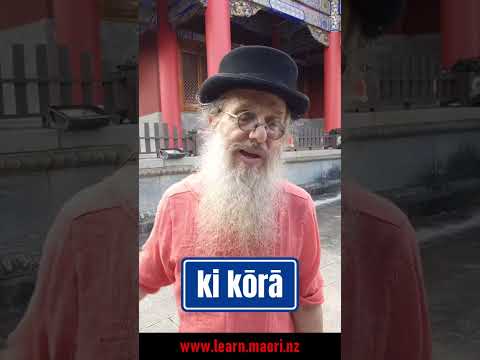
Te reo Māori has two distinct sets: tēnei/tēnā/tērā (and plurals ēnei/ēnā/ērā) for things near me, you, or over there. The second set—konei, konā, and korā—refers specifically to places, meaning "here where I am," "there where you are," and "over there," and these have no plural forms. When talking about movement to a place, add ki (as in ki konei), while i indicates position or movement from a place.
ko tēhea?
#85: Which is the right road?
ko tēhea?

Ko tēhea? asks “which one?” and ko ēhea? asks “which ones?”. These forms follow the pattern where singular words beginning with t lose the t in the plural. They are used to select from a group, and answers replace tēhea/ēhea with the correct item.
ko wai?
#69: Who is the woman singing?
ko wai?

Ko wai is used to ask who someone is. Answers keep ko and replace wai with the person’s name, emphasizing identity (e.g., Ko Rangi te rangatira). This pattern can also include clauses and different tenses, allowing questions like who is speaking, who came, or who ate something, with answers highlighting the person involved.
mā for future possession
#143: You will be the one to do the dishes
Future possession and action using m-class possessives

In Māori, m-class possessives (mā, mō) indicate future or unrealised possession—something not yet owned. They also show who will perform an action (e.g., māku = for me to do). Unlike t-class, plurals retain the initial letter (māku, not āku). Mō can also mark future time.
#146: The food is for the hangi
mā and mō for things and events

In Māori, "for" is expressed using mā (a category) or mō (o category), depending on possession. Examples: mā te tina (for dinner), mō te whare. SlMamy speakers use mō universally, which is also acceptable.
mai
#15: I'm coming. You're going.
haere mai, haere atu
Direction markers: ake (up), atu (away), iho (down) and mai (towards the speaker).
mātou
#14: I'm not crying. You're crying.
koutou, rātou, rātou, mātou
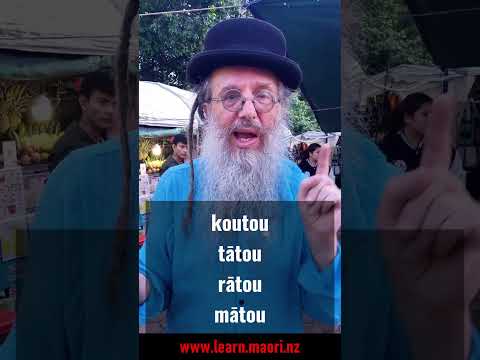
Plural personal pronouns, including "us but not you".
māua
#14: I'm not crying. You're crying.
koutou, rātou, rātou, mātou
Plural personal pronouns, including "us but not you".
#30: We two (not you) are going
māua, tāua, rāua
Dual pronouncs: me, not you; you and me, those two, you two.
mea
#117: He said, she said
kī, mea
In te reo Māori there are three common ways to talk about speaking: kōrero, mea, and kī. Kōrero describes the act of speaking without stating what was said. Mea reports what someone said indirectly. Kī is used to quote a person’s exact words. The word kī (with a macron) differs from ki (without one). The phrase e ai ki means “according to” and introduces reported sources, opinions, or traditional sayings.
mō
#146: The food is for the hangi
mā and mō for things and events
In Māori, "for" is expressed using mā (a category) or mō (o category), depending on possession. Examples: mā te tina (for dinner), mō te whare. SlMamy speakers use mō universally, which is also acceptable.
nā... i...
#137: It was Rangi who farted
nā - agent emphatic

The agent emphatic in te reo Māori emphasizes who did an action, using nā for past and mā for future. For example, Nā Rangi te pānui i te pukapuka means “It was Rangi who read the book.” Pronouns like nāku (“it was me”) are also used.
negating possessives
#128: I don't have any dogs, you don't have any dogs, they don't have any dogs
kāore āku, kāore ā rāua, kāore ā tātou, kāore ā rātou, etc
Kāore + possessive expresses not having or owning something. Use kāore + ā/ō + pronoun + noun, depending on the a/ō category. The ā/ō is required before pronouns, and the noun is typically plural. For example: kāore ā rāua kurī — those two don’t have any dogs.
nouns
#16: The dog is running
kei te + verb + noun
Simple sentences in the present tense with a verb and a noun as a subject.
Kei te haere te wahine.
Kei te haere te kōtiro.
numbers and counting
#89: 2025
counting over 9
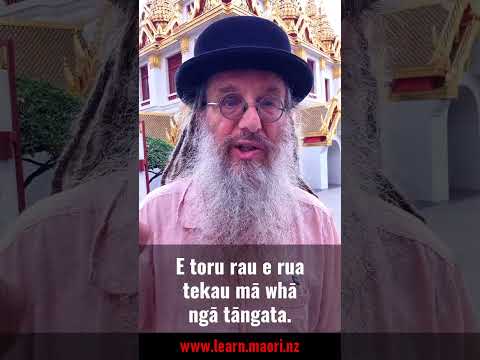
In Māori, numbers 2–9 take e when counting things (e.g., E whā ngā pukapuka) and toko when counting people (e.g., Tokorima ngā tamariki). Kotahi is used for one. After nine, tekau is used without these prefixes. Larger numbers combine digits with mā (“and”), rau (hundred), and mano (thousand).
objects in a sentence
#22: The bird is flying to the tree
ki to indicate direction towards
Using ki to indicate direction.
Kei te haere ahau ki te toa.
Kei te hīkoi ahau ki te hokomaha.
Kei te taraiwa ahau ki te tāone.
#24: I am reading the book
i to identify the object of the sentence
The object of a sentence (a book being read, a cake being eaten) is marked by "i" in a sentence.
Kei te kai ahau i te keke.
Kei te pānui a Rangi i te pukapuka.
#25: I love the woman
ki to identify the object of the sentence
Some verbs, such as arohoa, take "ki".
Kei te aroha te whaea ki tāna tamaiti.
past tense
#31: The family were playing the game
past tense using i and i te
#33: I am going, I was going, I went.
past tense: i te
#37: I have danced
kua

The tense marker kua is translated with "has" or "have".
pea
#182: Perhaps she will be happy again
pea, tērā pea, anō
Anō means "again" and marks repeated actions, while tonu means "still" for ongoing states. Pea expresses uncertainty ("perhaps") and can follow nearly any word—verbs, nouns, adjectives, or agents. With numbers it means "approximately." Pea cannot start a sentence; use Tērā pea instead.
pēnei, pēna, pēra
#185: Don't talk like that!
pēnei, pēna, pēra
Here is a grammar outline based on the examples provided:
The particles **pēnei** (near me), **pēnā** (near you), and **pērā** (over there) are demonstrative adverbs meaning "like this/that." They indicate proximity and are used with verbs to describe how an action is performed. When comparing, they are often followed by i ("like" + noun).
personal pronouns
#5: Hello to all of you!
koutou
The plural personal pronoun koutou.
Tēnā koutou!
#14: I'm not crying. You're crying.
koutou, rātou, rātou, mātou
Plural personal pronouns, including "us but not you".
plurals
#18: The sheep are standing
plurals
Usually, nouns don't change in the plural.
#20: The women are singing
plural nouns like wāhine
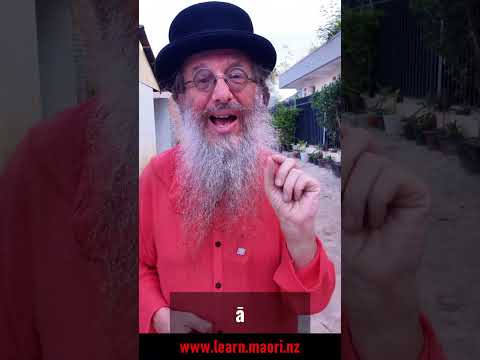
A handful of words change their forms in Māori by lengthening the vowel: wahine becomes wāhine.
#21: The happy children are playing
tamariki as a plural
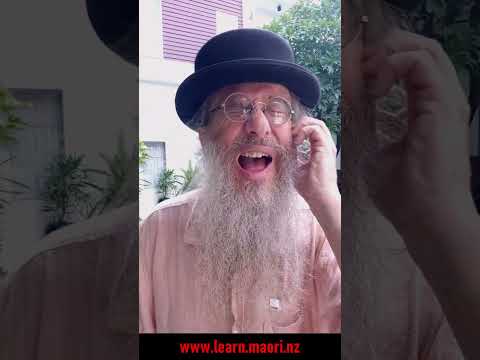
A handful of words change slightly in the plural (eg, wahine becomes wāhine). The exception to the rule that words in Māori don't change in the plural is the word for child (tamaiti) which because tamariki is plural.
#43: We are going to his house
Neutral plural possessives: aku, o and ana.
possessives
#42: I am eating your apple, you are eating my apple
neuter singular possessives: taku, tō, tana

How to say "my", "your" and "his/her".
#43: We are going to his house
Neutral plural possessives: aku, o and ana.
#45: I have a cup of tea
Possession using he... taku
In te reo Māori, He X ahau means “I am X,” not “I have X.”
To say “I have,” you must use possessives like tāku (one thing) and āku (more than one).
Some people and family words also change in the plural by lengthening the vowel, like tuakana → tuākana.
#49: His car is red
Tōna and tāna- belonging to him or her
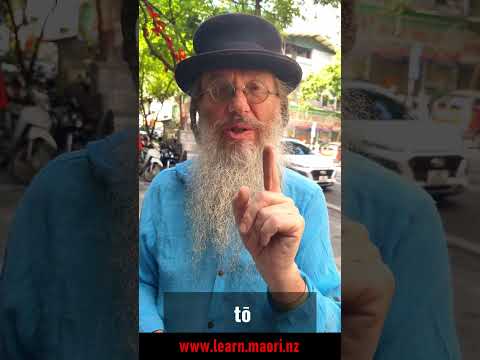
In Māori, neutral possessives are "taku" (my), "tō" (your), "tana" (his/her). Using the "a" and "o" categories: "tāku" (my, a), "tōku" (my, o). Transport falls into the "o" category, as do body-related items, like a hat.
#50: Our car is yellow
Possession with groups uses the personal pronouns with tā (a-category) or tō (o-category). For example, tō tātou whare means “our house” (belonging to all of us), and tō rāua whare means “their house” (belonging to those two). If two people share something but not the listener, we use tō māua, as in tō māua waka (“our car, not yours”).
#51: Our tomato is red
All the singular personal possessives in the a and o categories
Possessive pronouns in the a category correspond to the 11 personal pronouns. The forms are tāku, tāu, tāna, tā tāua, tā māua, tā kōrua, tā rāua, tā tātou, tā mātou, tā koutou, tā rātou. They indicate possession of a-category items such as food, work, pets, or created things, matching the person or group involved.
#128: I don't have any dogs, you don't have any dogs, they don't have any dogs
kāore āku, kāore ā rāua, kāore ā tātou, kāore ā rātou, etc
Kāore + possessive expresses not having or owning something. Use kāore + ā/ō + pronoun + noun, depending on the a/ō category. The ā/ō is required before pronouns, and the noun is typically plural. For example: kāore ā rāua kurī — those two don’t have any dogs.
preposed particles
#187: Particles in the preposed periphery
mātua
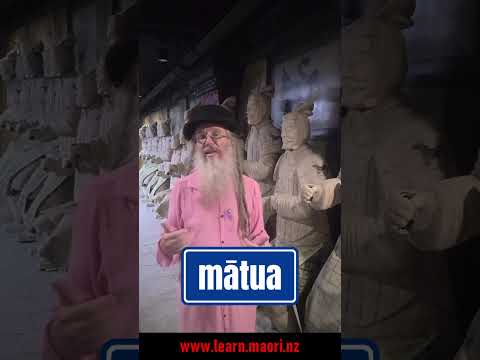
Māori has preposed particles (before head words: āta, tino, āhua, mātua, tense markers, determiners) and postposed particles (after: atu, tonu, hoki, kē, ana). Some structures use both (e…ana). Mātua implies "first and foremost" (priority), unlike tuatahi ("firstly").
pronounciation
#19: Your armpit smells delicious
pronunciation - keke vs kēkē
Māori pronunciation.
questions
#12: How are you?
Kei te pēhea koe?

The question "how are you? Kei te pēhea koe?"
And you? Me koe?
Āe, kao, auē!
Kei te pēhea koe?
Me koe?
Kei te pēhea ia?
rānei
#175: Are you a man or a mouse?
rānei
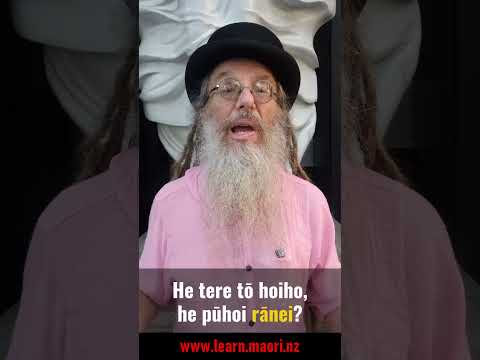
Rānei means "or", but unlike in English,it is placed after the final listed option. It handles multiple choices and, with a single option, turns statements into emphatic yes/no questions (implying "or not"). It works in negative forms too. Its core role is marking direct, choice-focused questions.
#176: Have you read the book, or not?
ranei, kaore rānei, ehara rānei

In Māori, rānei forms questions; its placement shifts emphasis (action, subject, or object). Kāore rānei means "or not". Ehara rānei asks negative questions. Crucially, answering "yes" agrees with the negative statement ("I have not"), while "no" contradicts it ("I have").
rāua
#30: We two (not you) are going
māua, tāua, rāua
Dual pronouncs: me, not you; you and me, those two, you two.
rawa atu
#174: You cat is too fat
rawa atu
Use tino before an adjective for "very"; rawa after for "too/excessively". Combine tino...rawa for "very exceedingly". Comparatives use ake...i ("than"). Superlatives use rawa atu ("the most"). Adding tino before rawa atu intensifies to "absolutely amazing".
subjects in a sentence
#16: The dog is running
kei te + verb + noun
Simple sentences in the present tense with a verb and a noun as a subject.
Kei te haere te wahine.
Kei te haere te kōtiro.
#17: The big man is crying
nouns + adjectives
Simple sentences with a noun and an adjective. Unlike in English, the adjective follows the noun (the house big, the cer red). For example: "Kei te oma te tāne nui" (the big man is running).
Kei te tangi te tane nui.
Kei te waiata te wahine kaha.
Kei te auau te kurī kino.
Auau, kino
taku, tō, tana
#42: I am eating your apple, you are eating my apple
neuter singular possessives: taku, tō, tana
How to say "my", "your" and "his/her".
tāua
#30: We two (not you) are going
māua, tāua, rāua
Dual pronouncs: me, not you; you and me, those two, you two.
#100: That aforementioned thing
taua, aua
In Māori, nouns require a determiner before them to indicate which, how many, or whose item is meant. Common determiners include te (the, singular), ngā (the, plural), he (a/some), tētahi (a), and ētahi (some), as well as possessive and demonstrative forms like tēnei, tēnā, tērā. The determiner taua refers to something previously mentioned (“that aforementioned thing”), with plural aua.
tēnei, tēnā, tērā, ēnei, ēnā, ērā
#38: Those birds near you are beautiful
tēnei, tēnā, tērā, ēnei, ēnā, ērā

Instead of using "the" or "a", we can use words like "this" or "those". In te reo Māori we have tēnei (this near me), tēnā (that near you) and tērā (that over there) amd the plurals ēnei, ēnā and ērā.
#188: Rangi will eat that cake over there
te ___ nei, te ___ nā, te ___ rā
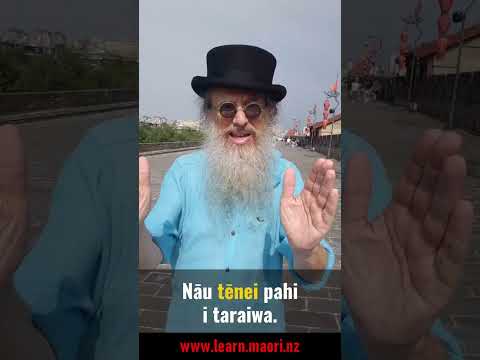
Māori demonstratives—tēnei (near me), tēnā (near you), tērā (over there)—can be single words or split as te...nei/nā/rā around a noun. For agent emphatic, past uses nā + agent + i + verb (object takes no i), future uses mā + agent + e + verb. The demonstrative may precede or follow the noun.
tētahi, ētahi
#36: A police offer chased a thief
tētahi and ētahi
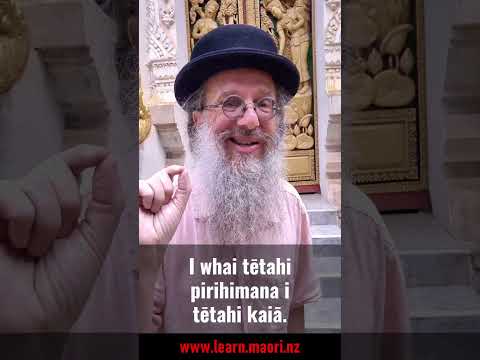
"a" and "some"
tino
#9: I'm very sick
tino, āhua
Use of tino and ahua to mean "very" and "somewhat".
"Kei te tino pai" means "I am very well and "Kei te āhua ora koe" means "you are somewhat well".
Kei te tino pai ahau.
Kei te āhua pai ahau.
Kei te tino māuiui ia
Kei te āhua māuiui ia.
tōna, tāna
#49: His car is red
Tōna and tāna- belonging to him or her
In Māori, neutral possessives are "taku" (my), "tō" (your), "tana" (his/her). Using the "a" and "o" categories: "tāku" (my, a), "tōku" (my, o). Transport falls into the "o" category, as do body-related items, like a hat.
tonu
#178: She immediately cried and is still crying.
tonu
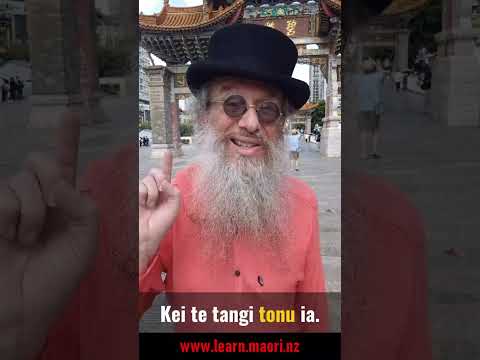
Tonu means 'still/continuously' with tense markers like kei te (kei te mahi tonu – still working). Without a tense marker in past narratives, it means 'immediately' (haere tonu – immediately went). Paired as rite tonu... ki, it means 'just like' for comparisons (rite tonu ki te tia – like a deer).
unrealised possession
#143: You will be the one to do the dishes
Future possession and action using m-class possessives
In Māori, m-class possessives (mā, mō) indicate future or unrealised possession—something not yet owned. They also show who will perform an action (e.g., māku = for me to do). Unlike t-class, plurals retain the initial letter (māku, not āku). Mō can also mark future time.
#146: The food is for the hangi
mā and mō for things and events
In Māori, "for" is expressed using mā (a category) or mō (o category), depending on possession. Examples: mā te tina (for dinner), mō te whare. SlMamy speakers use mō universally, which is also acceptable.