Te Reo Māori Videos!
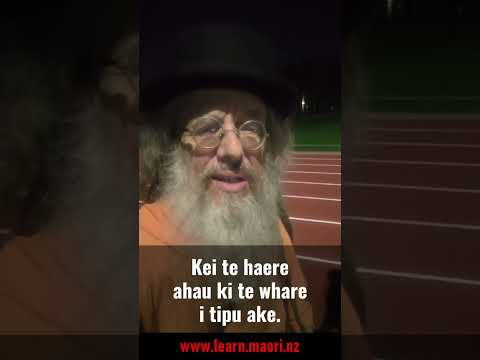
#203: The house grew up
i... ai
Māori uses i ... ai for past relative clauses meaning “where.” i marks past action; ai links the clause back to the earlier place. Ai is obligatory: without it, “the house where I grew up” becomes “the house that grew up.”
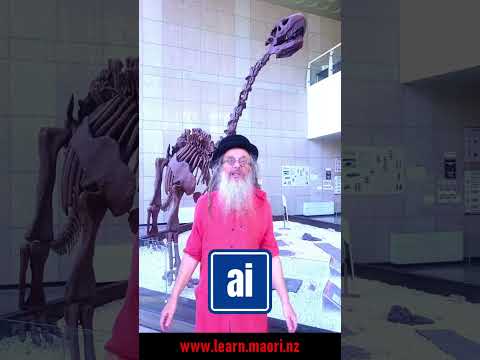
#202: I am going to the house where I grew up
ai
A sentence can contain two ideas that are connected. In te reo Māori, ai can help connect these ideas. One important use is i...ai, which can describe a place connected to an action. For example, te whare i tipu ake ai ahau means “the house where I grew up.” Here, ai links the place with the action.
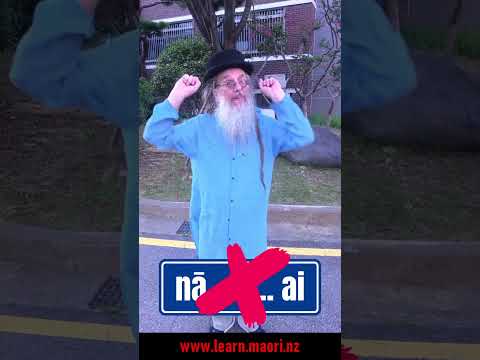
#201: The reason why something will happen
mā... e... ai
Use nā for past/present reasons (nā...i...ai; nā...e...nei), but mā for future (mā...e...ai). This mirrors agent emphatic (nā/mā) and possession (nā/nō, mā/mō) rules. The cause is present, the effect future (e.g., Māku a Rangi e harikoa ai – I’m the reason Rangi will be happy).
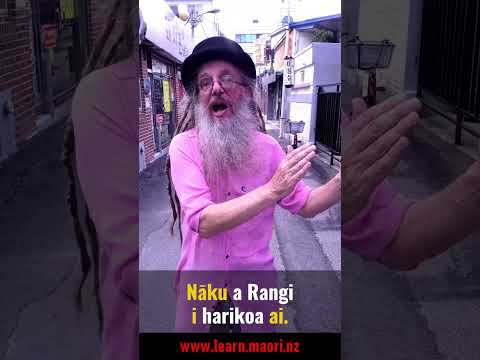
#200: I am leaving because of the crying of the baby
nā... e... ai
Use nā + reason/cause, then the affected person/thing, then verb with i... ai (past) or e... nei (present). Order: Nā [cause] [affected] i [verb] ai (past) or nā [cause] [affected] e [verb] nei (present). Explains because of X, Y happened/is happening.

#199: Belonging to the buying of food was my going to the supermarket
nā... i... nei
Nā... i... ai, expresses purpose as a reason: Nā te hoko kai i haere ai au – "to buy food." This builds on nā/nō's four other roles: agent emphasis (Nā Rangi), past possession (Nā Rangi tēnei), origin (Nō Ahuriri), and time (Nā tērā wiki).

#198: In order to
hei
Hei indicates purpose ("in order to") or role/function ("as"). It follows the main verb, requires the same subject in both clauses, and cannot be used with passive verbs.

#197: Kia... ai with statives
kia... ai
Kia... ai marks a purpose or intended outcome of an action. It takes a passive (whakakīa) to emphasize the action done to the subject, or a stative (kī, mahue, pai, ora) to describe the resulting state. It translates as "so that" or "in order for" something to occur.
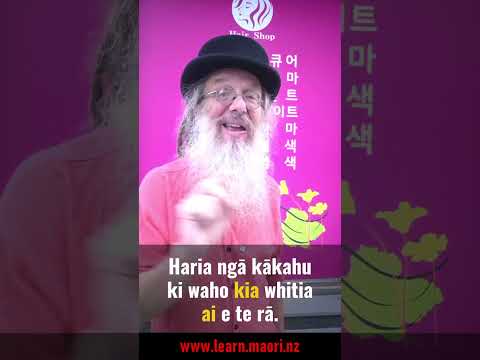
#196: Kia... ai with passives
Kia ai
Use *kia... ai* when two clauses have different subjects: the first action facilitates the second's desired outcome or state. It frequently pairs with passive verbs (e.g., *kitea*, *hokona*) to express an intended result, like ensuring something is seen, dried, or bought.
#195: For the purpose of someone else doing something
Kia... ai
The **kia... ai** structure links two clauses with different subjects: the first subject facilitates the second subject’s action. Use *kia* + verb in the dependent clause, and *ai* at the end of that clause to express purpose ("so that/in order that"). Example: *Homai te pukapuka kia pānui ai au* – "Pass the book so I can read."
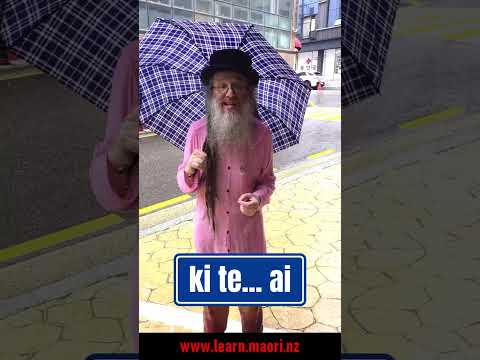
#194: I go to the beach in order to relax
ki te ...ai.
Ai marks habitual action (waiata ai ia) and reason in he aha... ai (why). With movement verbs, ki te... ai means "in order to" (purpose), e.g., haere ki te hokomaha hoko kai ai. Unlike plain ki te + verb, it emphasizes reason, but only works with verbs of motion (not sitting).
#193: What do I care if my ex gets married?
hei aha? he aha to...
Hei marks future location, time, purpose, or role. Hei aha? asks purpose ("what for?"). As a kīwaha, hei aha + noun means "never mind/don't worry about." With māku/māu/māna, it becomes "what does it matter to me/you/him?" – expressing indifference or irrelevance.
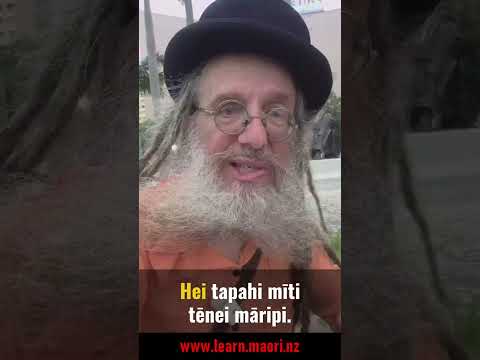
#192: One day these children will be respected elders
hei
Hei marks a **future purpose**—what an object will be used for (e.g., pen *for writing*, knife *for cutting meat*, box *used as a table*) or a **person's future role/job** (e.g., *will be a doctor*, *will be elders*). It never describes present actions, only intended or eventual functions and positions.