Te Reo Māori Videos!
#92: Chop the vegetables
Commands using passives
In Māori recipes, kia indicates the required quantity, such as Kia rua ngā kapu miraka (“Use two cups of milk”). Instructions are often given as commands. Short verbs use e (e.g., E tū! “Stand!”). Longer verbs usually take passive suffixes like -hia, -tia, or -a, creating commands such as Tapahia ngā huawhenua (“Chop the vegetables”).
#93: Tidy your room!
commands using the passive
In te reo Māori, commands are often formed using the passive imperative, where a passive suffix such as -hia, -tia, or -a is added to the verb (e.g., Tapahia ngā huawhenua – “Chop the vegetables”). These instructions are common in recipes, classrooms, and homes. In command sentences, the object does not take i. This structure is widely used for everyday instructions.
#94: Cause the book to be open!
whaka-
In te reo Māori, words can change meaning using suffixes (added to the end) and prefixes (added to the beginning). The prefix kai- indicates a person who performs an action (e.g., kaiako – teacher). The prefix whaka- means “to cause something to happen.” Combined with passive suffixes like -hia, these forms often create commands such as Whakapaihia tō rūma (“Tidy your room”).
#95: The cake was eaten by me
passive sentences
Passive forms are very important in te reo Māori. Unlike English, which usually prefers active sentences, Māori frequently uses passive constructions. A passive verb is formed by adding a passive suffix (e.g., kai → kainga). The thing affected becomes the subject, and the person who performed the action is introduced with e, e.g., I kainga te keke e au (“The cake was eaten by me”).
#96: Rangi is reading. The book is being read.
active and passive sentences
Active sentences describe someone doing an action, and in Māori the object is marked with i, e.g., Kei te pānui a Rangi i te pukapuka (“Rangi is reading the book”). Passive sentences describe something having an action done to it. The affected thing becomes the focus, and the agent is marked with e, e.g., Kei te pānuitia te pukapuka e Rangi. In active sentences the doer is required but the object is optional; in passive sentences the affected thing is required while the agent may be omitted.
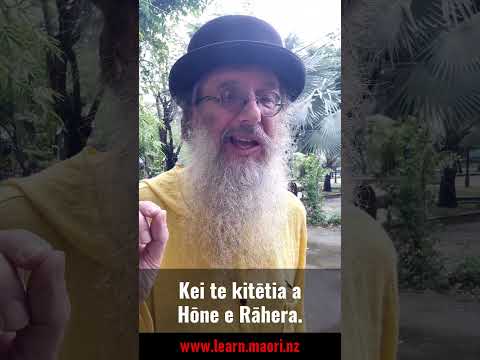
#97: Is Rangi helping Mere, it is Mere helping Rangi?
active and passive sentences
In Māori, passive sentences can be confusing when two people are involved. In a passive sentence, the person affected comes first and the agent (the one doing the action) is marked with e: Kei te āwhinatia a Rangi e Mere (“Rangi is being helped by Mere”). In an active sentence, the doer comes first and the object is marked with i: Kei te āwhina a Rangi i a Mere (“Rangi is helping Mere”).
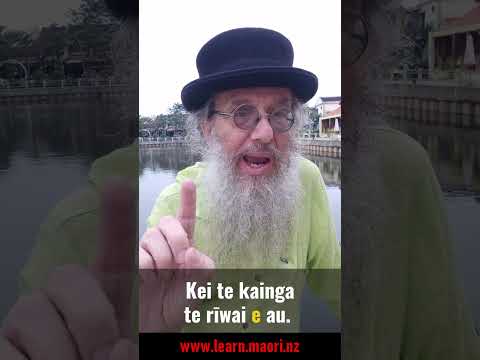
#98: I am being eaten by the cake.
i and e in active and passive sentences
In Māori, i marks the object in active sentences, e.g., Kei te kai ahau i te keke (“I am eating the cake”). i is not used in commands or passive sentences. In passive sentences, the person performing the action (the agent) is marked with e, e.g., Kei te kainga te keke e au (“The cake is being eaten by me”).
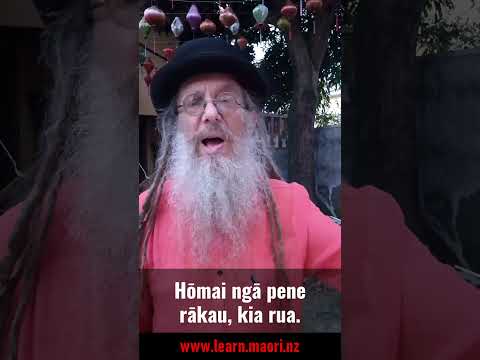
#99: Give me those!
hōmai and hōatu
In Māori, hōmai means “give to me” and hōatu means “give away from me to someone else.” They function like command forms and follow similar rules to passive imperatives, so i is not used before the object (e.g., Hōmai te waea ki a au). Quantities can be added using kia. These forms are commonly used for requests and instructions.
#100: That aforementioned thing
taua, aua
In Māori, nouns require a determiner before them to indicate which, how many, or whose item is meant. Common determiners include te (the, singular), ngā (the, plural), he (a/some), tētahi (a), and ētahi (some), as well as possessive and demonstrative forms like tēnei, tēnā, tērā. The determiner taua refers to something previously mentioned (“that aforementioned thing”), with plural aua.
#101: We are arguing. No we're not!
Negative kei te
To negate a verbal sentence in te reo Māori, three steps are used. First, place kāore at the beginning of the sentence. Second, move the subject directly after kāore. Third, change the present marker kei te to i te. For example, Kei te waiata ahau becomes Kāore au i te waiata (“I am not singing”).
#102: I did not go, I was not going, I am not going
Negating past tense with kāore subject i verb
Different tense markers in te reo Māori have specific negation patterns using kāore. For kei te (present) and i te (past continuous), the negative form is kāore + subject + i te + verb, e.g., Kāore au i te haere (“I am/was not going”). For i (simple past), the form is kāore + subject + i + verb, e.g., Kāore a Rangi i katakata (“Rangi did not laugh”). Because present and past continuous negatives look identical, context or time words such as inanahi (yesterday) or ināianei (now) clarify the meaning.
#103: The mother is watching the children who are not playing
Negating e.. ana with kāore... e... ana...
The tense marker e…ana describes ongoing action and can refer to past, present, or future depending on context (e.g., E kai ana ahau). Its negation is formed with kāore + subject + e + verb + ana, such as Kāore au e kai ana (“I am/was/will not be eating”). This structure can also appear in relative clauses.
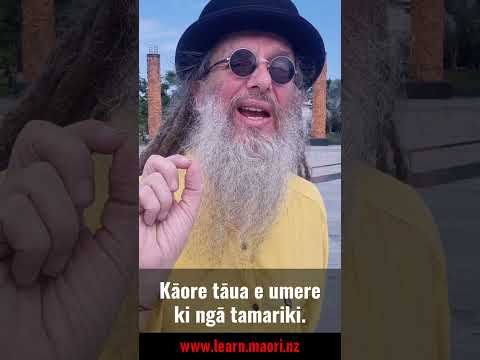
#104: He will not drive his car at night
Negating ka with kāore... e
The future marker ka is negated with kāore + subject + e + verb, not ka. For example, Ka kai au (“I will eat”) becomes Kāore au e kai (“I will not eat”). The particle e indicates unrealised action—something that has not happened and will not happen. The same particle appears in other structures, including commands, counting, passive agents, and ongoing actions.
#105: I have not yet eaten crocodile meat
negating kua wirh kāore anō... kia
The tense marker kua (has/have) is negated using the structure kāore anō … kia …. This expresses that something has not happened yet, e.g., Kāore anō au kia kai (“I have not eaten yet”). It differs from kāore au e…, which means someone will not do something in the future.
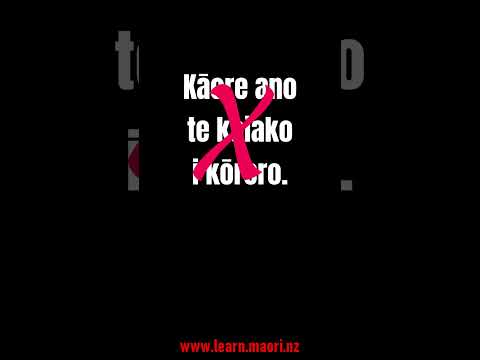
#106: Pop quiz
negating verbal sentences
Māori verbal negation depends on the tense marker. Kei te and i te become kāore + subject + i te + verb. I becomes kāore + subject + i + verb. E…ana becomes kāore + subject + e + verb + ana. Ka becomes kāore + subject + e + verb. Kua uses kāore anō … kia …, meaning “not yet.”
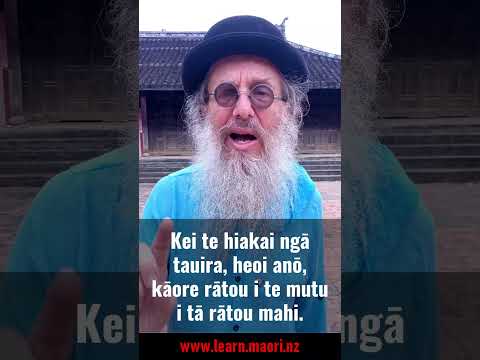
#107: The children are eating, however their food is not healthy
on the other hand, however, heoi anō
In te reo Māori, conjunctions connect clauses to form longer sentences. Common conjunctions include ā (“and”), engari (“but”), and heoi anō (“however” or “on the other hand”). These link positive and negative statements, contrast ideas, or add additional information. Heoi anō often introduces a contrasting point similar to “however.”
#108: We're off to see the wizard because of the wonderful things he does
nā te mea - because
In te reo Māori, the idea of “because” is expressed with the phrase nā te mea, which links a result with its reason. It introduces the cause of something previously stated, creating a complex sentence. For example: Kāore harikoa a Rangi nā te mea kei te māuiui ia (“Rangi is not happy because he is sick”).
#109: Rangi is hungry therefore he is angry
Nō reira - therefore
The discourse marker nō reira means “therefore” and introduces a result that follows from a previously stated idea. It contrasts with nā te mea (“because”), which explains the cause of something already mentioned. Nā te mea looks back to the reason, while nō reira points forward to the consequence.
#110: You are happy, therefore you are dancing
Nā te mea, nō reira
Nā te mea means “because” and introduces the cause of something, while nō reira means “therefore” and introduces the result. Nā te mea looks back to explain why something happened, whereas nō reira points forward to the consequence that follows from what has just been said.
#111: Right, let's go then!
discourse markers
In te reo Māori, discourse markers such as heoi anō, nō reira, and nā te mea help organise conversation and connect ideas. They can function like conjunctions (“however,” “therefore,” “because”) but can also appear at the start or within sentences to guide the flow of speech, signal contrast, conclusions, or transitions in discourse.
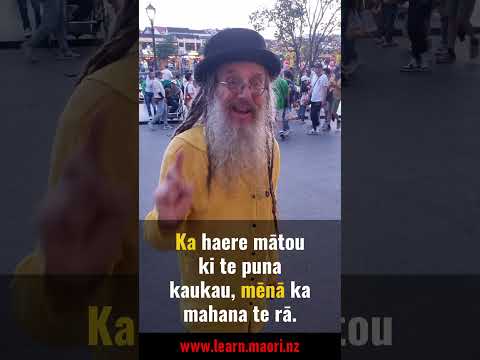
#112: If I was a goldfish I'd live in a lily pond
mehemea, mēnā, mena
In te reo Māori, mehemea (often shortened to mēnā) means “if” and introduces conditional sentences. It links a condition with a result, commonly using the pattern mehemea/mēnā … ka …. It can refer to past, present, future, or hypothetical situations and may appear at the beginning or middle of a sentence.
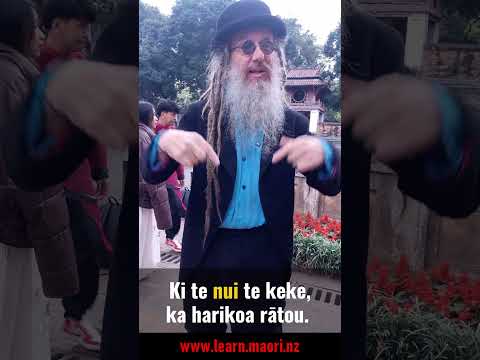
#113: If it rains we will stay home
if using ki te
Another way to say “if” in Māori is ki te. Unlike mehemea/mēnā, ki te must be followed by a verb and usually refers to future or likely events. It often appears in the structure ki te … ka …. In contrast, mehemea/mēnā can describe past, present, future, or hypothetical situations.
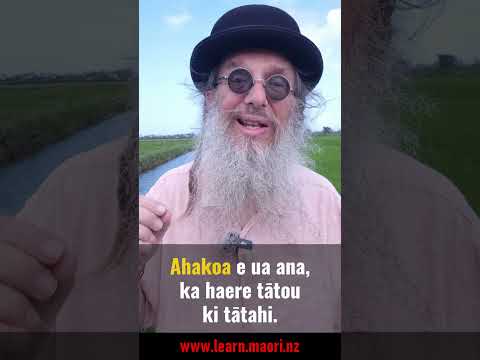
#114: Although it is raining, we are going to the beach
ahakoa
In te reo Māori, ahakoa means “although” and links two ideas where the second is true despite expectations created by the first. It introduces a surprising contrast. For example: Ahakoa e ua ana, ka haere tātou ki te tātahi — although it is raining, we will go to the beach. It can appear at the start or in the middle of a sentence.
#115: The and, but, although, however game
In te reo Māori, longer sentences can be created using conjunctions and discourse markers to connect ideas. Words like ā (and), engari (but), ahakoa (although), nā te mea (because), kātahi ka (then), nō reira (therefore), and heoi anō (however) link clauses, explain reasons, show contrast, or indicate sequence.
#116: I will write the letter with the pen
In order to and ki to indicate the tool
In te reo Māori, ki can indicate the tool or instrument used to perform an action. It corresponds to English “with” or “using.” For example, Ka tuhi ahau i te reta ki te pene means “I will write the letter with the pen.” The tool follows ki to show how the action is done.
#117: He said, she said
kī, mea
In te reo Māori there are three common ways to talk about speaking: kōrero, mea, and kī. Kōrero describes the act of speaking without stating what was said. Mea reports what someone said indirectly. Kī is used to quote a person’s exact words. The word kī (with a macron) differs from ki (without one). The phrase e ai ki means “according to” and introduces reported sources, opinions, or traditional sayings.
#118: The doctor says you are well but he thinks you will die
E ai ki.../E ai ki tā... /Ki tā
In Māori, kī (with a macron) is used to quote someone directly. Another word, ki, appears in the phrase e ai ki, meaning “according to.” It introduces reported statements, sources, or sayings, such as news reports, people’s claims, or traditional proverbs. A related form, ki tā, expresses someone’s opinion rather than reporting their words. Thus e ai ki reports what someone said, while ki tā indicates what someone thinks.

#119: The stink is pleasant to the flies
He pai ki a au...
In te reo Māori, ki can express personal feeling or preference using the pattern he pai … ki a …, meaning something is “good to” someone, or simply “someone likes something.” For example, He pai te waiata ki a au means “I like the song.” This structure can be used with people, things, or places. It can be negated with kāore e pai ki a… (“does not like”). The order can vary slightly, but the meaning remains the same. This pattern differs from possession sentences such as He pai tāku kawhe (“My coffee is good”).
#120: Negations of identity sentences
ehara...
In te reo Māori, negation depends on the type of sentence. Verbal sentences (those with verbs) are negated with kāore, for example Kāore ngā tamariki i te takaro (“The children are not playing”). Non-verbal sentences, such as those beginning with he or ko, are negated with ehara, for example Ehara te kurī i te pai (“The dog is not good”). In both cases the subject follows the negation, and i te often appears in present-tense negative forms.
#121: Negating ko
Negating "ko" sentences with ehara.
In te reo Māori, he and ko sentences (non-verbal sentences) are both negated with ehara. For example, He maunga tērā (“That is a mountain”) becomes Ehara tērā i te maunga (“That is not a mountain”), and Ko te maunga tērā (“That is the mountain”) is negated the same way. Because both structures use ehara, the negation looks identical. The difference between he and ko is that he classifies something, while ko emphasizes or identifies it. However, in practice you can simply use ehara to negate either type.
#122: Too right mate!
Ehara ehara = absolutely!
At the beginning of a sentence ehara functions as a negation used to contradict he or ko statements, meaning “is not”. However, ehara alone can also act as an interjection expressing surprise, agreement, or emphasis, similar to “sure enough” or “indeed.” The idiom ehara ehara! is an emphatic affirmation meaning “absolutely.” Ehara can also contradict negative questions, meaning “on the contrary.”
#123: Spill the beans!
kīwaha
Ehara normally functions as a negation meaning “not.” However, expressions such as ehara! or ehara, ehara! can be used colloquially as kīwaha, where the literal meaning shifts and the phrase expresses strong agreement or emphasis, similar to English idioms like “wicked,” “sick,” or “yeah, right.”
#124: Talking about more than one person
rāua ko..., rātou ko... ko...
English “and” has three different uses that are expressed differently in te reo Māori. Ā joins two clauses (“I am happy and well”). Me joins nouns in a list (“fish and chips”). Rāua ko joins two people, while rātou ko joins three or more people in sentences.
#125: Talking about you and other poeple
māua ko, mātou ko
Rāua refers to two people (not including the speaker or listener), while rātou refers to three or more. When naming people, Māori uses rāua ko or rātou ko. For “someone and I,” use māua ko without ahau. For three or more including the speaker, use mātou ko followed by each person’s name.
#126: I don't have any wives
Kāore aku...
Te reo Māori distinguishes between possession and ownership.
Kei a koe he pukapuka? asks if a book is with you (locative possession).
He pukapuka āu? asks if you own a book (possessive).
Negation differs: Kāore he pukapuka kei a au (none with me) versus Kāore āku pukapuka (I own none, using plural possessive).
#127: There are no people at your party
Negating he with kāore he
Sentences starting with he are negated with kāore he, meaning "there are no...". For example "kāore he pene" (there are no pens). This is different from "kāore āku pene" (I have no pens).
#128: I don't have any dogs, you don't have any dogs, they don't have any dogs
kāore āku, kāore ā rāua, kāore ā tātou, kāore ā rātou, etc
Kāore + possessive expresses not having or owning something. Use kāore + ā/ō + pronoun + noun, depending on the a/ō category. The ā/ō is required before pronouns, and the noun is typically plural. For example: kāore ā rāua kurī — those two don’t have any dogs.
#129: I don't have your stupid book
Negating locatives wirh kāore... i te...
This lesson explains the difference between owning something and simply having it with you in te reo Māori. Ownership uses tā/ā and is negated with “kāore āku…”, while possession as location uses “kei a…”. Because kei is locative, it is negated like present actions using “kāore… i (te)…”. Thus, “kāore tō pukapuka i a au” means the book is not with me.
#130: Negative active commands - Don't!
Kaua e..., kāti...
Te reo Māori uses various commands: gentle (kia), should (me), direct (e), and intense (passive). Prohibitions use kaua e + verb, with pronouns and objects possible. Kāti stops an ongoing action, taihoa delays, and kaua rawa forbids forever. Active objects use i, passives use e.

#131: Don't do this lest...
kei, kaua... kei, tūpato kei
Kaua e is used for direct prohibitions (e.g. Kaua e oma – don’t run). Kei is used for warnings about possible consequences (e.g. Kei hinga – don’t fall). Kei te marks present tense, but kei alone signals warning. Often used in phrases like kia tūpato kei… or alongside kaua e to express “lest.”
#132: The cake is not being eaten by Rangi
Negating passive sentences wirh kāore... i te...
Passive sentences describe actions done to something, using a verb with a passive suffix (e.g. pānuitia). The object marker (i/ki) disappears, and the agent is marked with e. To negate passives, use kāore…i te…. Passive commands use kaua e before the passive verb.

#133: Why didn't you talk to the teacher?
he aha i kore ai e?
In Māori, asking “why” uses he aha with different particles for past (i…ai), present (e…ana, or e…nei for right now), and future (e…ai). To negate (“why didn’t/aren’t/won’t”), add kore: he aha [subject] i kore ai e [verb] (past), e kore ai e (future), or i kore ai e…ana (present).
#134: I am unable to drive the car
Ka taea e, kāore e taea e
In te reo Māori, "ka taea e" expresses ability (e.g., "Ka taea e au te tunu" – I can cook). Negation uses "kāore e taea e" for present/future ("can't") and "kāore i taea e" for past ("couldn't"). Examples: "Kāore e taea e au te pānui" (I can't read).
#135: I am able to look after your children (but I'm not going to)
Ka taea e... te..., kāore... taea...
The Māori phrase "ka taea e..." expresses ability (can/able) in present or future tense. Past tense uses "i" instead of "ka". Negation requires "kāore e" (present) or "kāore i" (past). An alternative word order exists (agent, object, verb). Importantly, it asks about capability, not intent to act.
#136: The children are allowed to watch TV
āhei
In te reo Māori, ka taea e... expresses ability (“I am able to…”), while ahei expresses permission (“I am allowed to…”). For example: Ka taea e au te taraiwa (I can drive) vs. Kei te ahei au ki te taraiwa (I am allowed to drive). Negatives use kāore.

#137: It was Rangi who farted
nā - agent emphatic
The agent emphatic in te reo Māori emphasizes who did an action, using nā for past and mā for future. For example, Nā Rangi te pānui i te pukapuka means “It was Rangi who read the book.” Pronouns like nāku (“it was me”) are also used.
#138: The mother will be the one to tidy the room
future agent emphatic: mā, māku, māu, māna
In Māori, mā marks the future agent emphatic, highlighting who will do the action. Use māku (I will), māu (you will), māna (he/she will), plus dual/plural forms like mā tātou (we all will). Example: Mā Pāpā te kōrero – It will be Father who speaks.
#139: My father is from Napier
nāku, nōku...
In te reo Māori, nō indicates origin or belonging (o-category). It answers Nō hea? “Where from?”: Nō Kāpiti ahau (I’m from Kāpiti), Nō Tainui ia (he belongs to Tainui). Unlike nā (agent emphatic, a-category), nō is used for home, iwi, and place of belonging.
#140: The difference between nā and nō
Nāku versus nōku
In te reo Māori, nā/nāku (a-category) emphasizes the doer of an action (e.g., Nāku te waiata – I was the one who sang). Nō/nōku (o-category) indicates origin or belonging (e.g., Nō Kāpiti ahau – I’m from Kāpiti). The choice follows the a/o possession rules: mahi vs. home/land/iwi.

#141: In the time of the ancestors
nā to refer to a time
In te reo Māori, nā marks possessive time phrases like “from the 1960s” or “belonging to last week.” It adds emphasis, translating as “it was [time] that…,” often paired with ai (“when”). Example: Nā tērā wiki ahau i haere atu — “It was last week that I went.”

#142: N is used for emphasis
He use of nā and nō for emphasis on possession, actions and locations.
The n-class possessives (nā, nō) add emphasis. They highlight the owner (e.g., “MY pen”), the doer (e.g., “Rangi spoke”), or the time (“last week”). Their core function is to stress a specific element—possession, action, or time—in a statement.
#143: You will be the one to do the dishes
Future possession and action using m-class possessives
In Māori, m-class possessives (mā, mō) indicate future or unrealised possession—something not yet owned. They also show who will perform an action (e.g., māku = for me to do). Unlike t-class, plurals retain the initial letter (māku, not āku). Mō can also mark future time.
#144: Who will dance all night?
Nā wai i...? ? Wai e...?
Use nā wai + i for past actions (“who did?”), and mā wai + e for future (“who will?”). Answer with nā or mā plus the doer. Use nā/mā (not nō/mō) because actions (mahi) are in the ‘a’ category. Examples given.
#145: Belonging to a reason
nā / nō
In Māori, nā and nō can mean “because” (belonging to a reason). Often used with ai, e.g., Nā te ua te tāne i mākū ai (“because of the rain, the man got wet”). Nā te mea also means “because.”

#146: The food is for the hangi
mā and mō for things and events
In Māori, "for" is expressed using mā (a category) or mō (o category), depending on possession. Examples: mā te tina (for dinner), mō te whare. SlMamy speakers use mō universally, which is also acceptable.
#147: The boy in the library
koia e te take ai
Use koia (e) te take "that's the reason," then i + ai for past, ka + ai for future, or e + ai for present. The i marks past reason; ka marks future; e marks present. Example: Kei te hiakai ahau, koia te take i kai ai ahau.
#148: I habitually go to the supermarket in order to buy food
Ai
The Māori particle ai has two key uses: marking habitual actions (e.g., Kōrero ai ia – she always talks) and indicating purpose or reason (ki te hoko ai – in order to buy). It also forms why questions (He aha ai?) and negative why didn’t/won’t questions using i kore ai or e kore ai.

#149: I listened to the woman who sang
ai
In te reo Māori, “ai” marks punctiliar (one-off) past actions in relative clauses, similar to “who” or “that” in English. It contrasts with continuous “e… ana”. For example, “I listened to the woman who sang” uses “ai”, but not for “who was singing”. Past punctiliar + subclause = “ai”.
#150: I will talk to the man who will know
e... ai
In Māori, ai marks relative clauses in past (i...ai) and future (e...ai) tenses, translating as "who," "where," or "that." Present tense avoids ai, using e...ana instead. Examples: I kōrero ai (who spoke), Ka haere ai (where will go).
#151: That is the house where I grew up (i... ai)
i....ai
In te reo Māori, the particle ai links a relative clause (who, where, that) to the main sentence—like glue on a post-it note. It also means when. Without ai, the clause floats meaninglessly. Example: Ko tēnei te whare i tipu ai ahau (This is the house where I grew up).
#152: Kātahi anō au kua tae mai. I have just arrived (or I have arrived at last, or I have arrived for the first time).
kātahi anō...
Katahi anō (or kātahi anō) means just now, at last, or for the first time.
It starts a sentence, followed by subject + ka + verb (past/instantaneous action).
It emphasizes a new, significant, or delayed event.
#153: The dog has changed to a state of being dead
kua...
Kua is a tense marker in te reo Māori used for completed recent past actions (perfect tense), future perfect, events just happening, actions beginning, or changes of state. Unlike English “have been,” kua is only for recent events, not distant past. Katahi anō also expresses that something has just occurred.

#154: Mere is the state of dancing
Kua
Both "Kātahi anō a Mere i kanikani" and "Kua kanikani a Mere" mean Mere has just danced, but with nuances. The first can also mean "finally" or "for the first time" by context. The second can mean "began to dance" or indicate a change of state.
#155: We are changing our state to being not here
kua
The Māori particle "kua" marks a change of state—from not well to well, bad to good, cheap to expensive, or present to leaving. It contrasts with simple descriptions ("he pai") and acknowledges past problems now resolved, as in "Kua pai" (it's become good, let's move on).
#156: I am no longer going to the meeting
kua kore
The kua kore structure negates kua (change of state) to mean something is no longer the case. It indicates a previous plan or action has changed: e.g., Kua kore ia e kanikani – she was going to dance but now isn’t.
#157: When the police arrived, the thief had already run away
kua... kē...
Kua marks completed actions or states. Uses: (1) Ask if something is done (Kua paraihe niho koe?). (2) Past unreal conditionals with me (Me i ako... kua mōhio...). (3) Subclauses with kē meaning "already" before another past event (kua kai kē). Indicates "have/had" done.
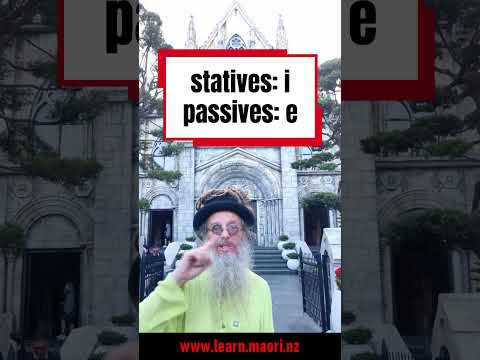
#158: The food has been consumed by the children
statives
Statives describe a state (e.g., harikoa = happy) and mark the agent/cause with i (e.g., i te waiata = caused by the song). Passives mark the agent with e (e.g., e ngā tamariki). Both can express similar actions: Kua pau te kai i ngā tamariki (stative) vs. Kua kainga te kai e ngā tamariki (passive).
#159: Rangi ate the cake. The cake was eaten by Rangi. If was Rangi who ate the cake.
active, passive, agent emphatic and stative sentences
Te reo Māori has four structures: active (subject acts, object with i/ki), passive (object as subject, verb suffix, agent with e), agent-emphatic (highlights doer with nā/mā), and stative (no suffix, agent with i, subject affected). Tenses apply across all. Key difference: passive uses e, stative uses i for the agent.
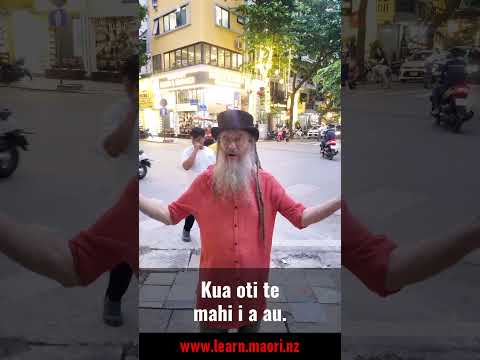
#160: The bus has been left behind by me
statives
"Kua mutu ahau" means "I have finished." For stative "oti," the object is the subject (e.g., "Kua oti te mahi"). Agents use "i a," not "e." For "mahue" (left behind): "Kua mahue ahau i te pahi" = I was left by the bus (not the bus left by me).
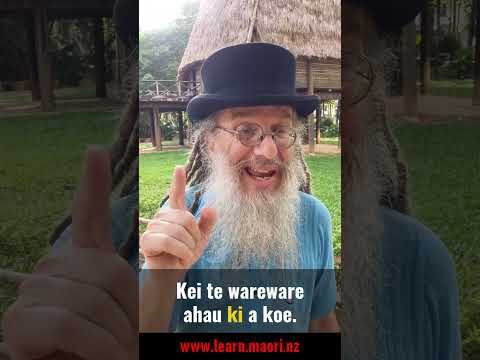
#161: I have been forgotten by your name
statives
Wareware can be active (takes ki: Kua wareware ahau ki tōu ingoa), stative (thing forgotten as subject, forgetter marked by i a), or passive (add ‑tia, doer with e). But kua wareware ahau i tō ingoa" means "I was forgotten by your nane"
#162: The children broke the window
active, passive and stative sentences
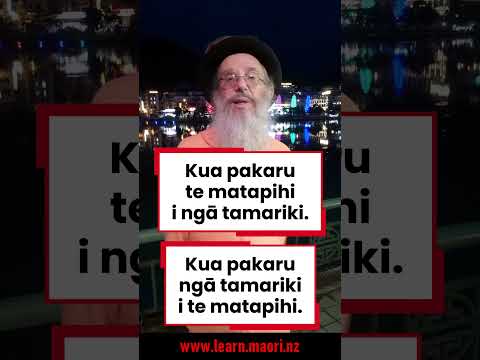
In Māori, pakaru (stative) takes the broken thing as subject, with the agent marked by i (e.g., Kua pakaru te matapihi i ngā tamariki). The active verb pākaru uses i for the object, while its passive form uses e and suffix -tia.
#163: The doctor made me well
Statives
Statives cannot take passive endings and so we command them with kia (e.g., Kia ora). We can add whaka- to a stative to turn it into an ordinary verb ("cause to be"), allowing passive endings (e.g., whakaora → whakaoratia).
#164: I am careful about eating sugar lest I die of diabetes
tūpato as a stative
Statives describe states. Kia commands a state (e.g., Kia tūpato – be careful), while kei warns against consequences (“lest”). I marks the cause, ki marks the object of care. Example: careful about sugar (ki) due to doctor (i), lest (kei) diabetes.
#165: The person who causes things to come and go
whaka and kai as suffixes
In Māori, prefix whaka adds 'cause to be/do' or 'turn into' to adjectives, statives, verbs, and nouns (whakaora = heal; whakakōwhatu = petrify). Prefix kai marks a doer (kaiako = teacher). Combined kaiwhaka- means 'one who causes' (kaiwhakahaere = manager; kaiwhakawhānau = midwife).

#166: Nominaliztion
-nga
In te reo Māori, verbs become nouns by adding suffixes like -nga (ako→akonga 'student'), -anga (noho→nohoanga 'seat'), -tanga (māuiui→māuiuitanga 'sickness'), -hanga (tangi→tangihanga 'funeral'), -enga (haere→haerenga 'journey'), and -onga (rongo→rongonga 'news'), with -tanga also used for abstract states (rangatira→rangatiratanga 'sovereignty').
#167: The teacher gave the prize to the students
whaka-
Beyond causation, whaka- brings surprises: whakanui = celebrate, whakamā = embarrassed, whakatika = stand up. It can reverse grammar—whakawhiwhi places the recipient with i and the item with ki (opposite to hoatu). Whakapapa (genealogy) metaphorically extends from papa (ground), laying your identity's foundation.
#168: I make myself a man
whaka-
The prefix whaka- is causative: it means "to cause to be" or "make" (e.g., whakamāori = translate into Māori). It also forms verbs from statives (whakarongo = listen) and nouns (whakaae = agree). With locatives, it indicates direction (whakamua = forward), and can follow verbs to show movement (haere whakaroto = go inside).
#169: A ceremony at which hats are caused to be worn
whaka-, -anga
Whaka- is a causative prefix (e.g., whakapōtae = cause to wear a hat). Adding -anga/-tanga/-hanga forms nouns (e.g., whakawhanaungatanga = relationship-building process). Some whaka- words, like whakaaro, act as both verb ('think') and noun ('thought').
#170: Sex with the boss
duplication
The prefix 'whaka-' is causative (cause an action) and can be reflexive (acting on oneself, e.g., whakatikatika). It often triggers reduplication, but the duplicated form's meaning is unpredictable and can diverge drastically from the base (e.g., mahi=work vs. mahimahi=sex).
#171: Is it really, really red or is it reddish.
duplication
Māori duplication has four patterns: full (tuhi to tuhituhi), initial (whero to whewhero), final (taweke to tāwekeweke), and partial (mōkai to mokamokai). Its effects vary: intensifying, repetition, pluralization, or diminishment. But the precise meaning is not predictable—for instance, whero means red but whewhero means reddish—so you must consult dictionary.maori.nz

#172: The bad big wolf
Two adjectives for the same thing
In Māori, adjectives cannot precede a noun in a string. Instead, repeat the noun or use mea ("thing") to avoid repetition: He kurī pango, he mea nui (the black dog, the big thing). For a second adjective, add hoki ("also"): He tangata mōmona, māngere hoki ia (a fat, lazy man).
#173: Trump is more bad than Obama
ake, atu, iho
Comparatives use ake (up) for “more” (better/bigger) and iho (down) for “less/smaller/worse”. Use i to introduce the thing compared. Note: kino ake is common for “worse”, but strictly it’s kino iho—though this can sound ambiguous, so rephrasing is safer.
#174: You cat is too fat
rawa atu
Use tino before an adjective for "very"; rawa after for "too/excessively". Combine tino...rawa for "very exceedingly". Comparatives use ake...i ("than"). Superlatives use rawa atu ("the most"). Adding tino before rawa atu intensifies to "absolutely amazing".
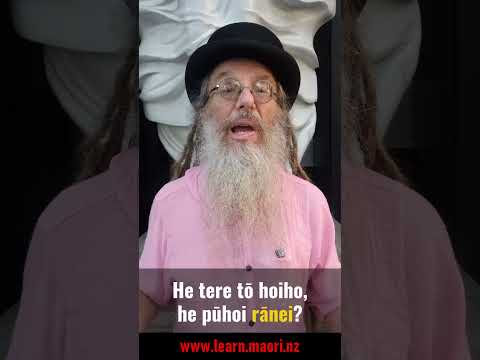
#175: Are you a man or a mouse?
rānei
Rānei means "or", but unlike in English,it is placed after the final listed option. It handles multiple choices and, with a single option, turns statements into emphatic yes/no questions (implying "or not"). It works in negative forms too. Its core role is marking direct, choice-focused questions.
#176: Have you read the book, or not?
ranei, kaore rānei, ehara rānei
In Māori, rānei forms questions; its placement shifts emphasis (action, subject, or object). Kāore rānei means "or not". Ehara rānei asks negative questions. Crucially, answering "yes" agrees with the negative statement ("I have not"), while "no" contradicts it ("I have").
#177: The really happy fish will indeed return
hoki
When hoki means "also" or "and," it always comes immediately after the word or phrase it adds to the statement. It can follow nouns to include an additional person or thing, verbs to add an extra action, adjectives to add another quality, or even entire clauses to connect related ideas. In every case, hoki simply attaches to whatever is being included, making it a versatile way to say "too" or "as well" across all parts of speech.
#178: She immediately cried and is still crying.
tonu
Tonu means 'still/continuously' with tense markers like kei te (kei te mahi tonu – still working). Without a tense marker in past narratives, it means 'immediately' (haere tonu – immediately went). Paired as rite tonu... ki, it means 'just like' for comparisons (rite tonu ki te tia – like a deer).
#179: All the children only the lollies
anake, katoa
"Anake" means "alone" or "only" and directly follows the word it modifies. Moving it changes meaning (e.g., "only sang" vs. "only Rangi" vs. "only one song"). It contrasts with "katoa" (all), as shown in examples like "only the women worked" versus "all the women worked."
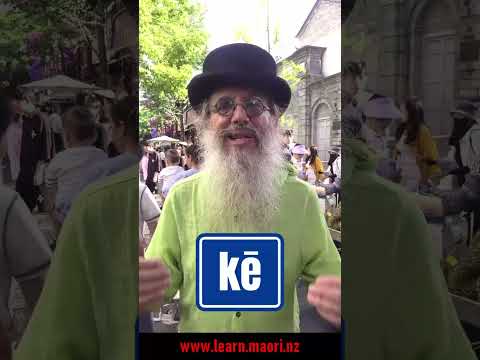
#180: Your hair is weird
kē
The Māori particle "kē" marks deviation from expectations in four ways: unexpected timing ("already"), contrary action ("instead"), surprising categorization (e.g., unusual strength), or departure from the norm (strange/extraordinary). Its translation depends on context—ranging from neutral surprise to compliment or mild criticism.
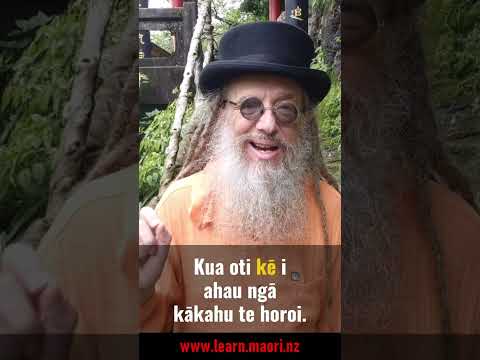
#181: I actually like vegetables
kē
"Kē" in te reo Māori signals contrast or unexpectedness. It means "instead," "actually," or "contrary to expectations." It can indicate a different location, an unexpected preference (like vegetables over lollies), a surprising action, or doing something in place of another activity.
#182: Perhaps she will be happy again
pea, tērā pea, anō
Anō means "again" and marks repeated actions, while tonu means "still" for ongoing states. Pea expresses uncertainty ("perhaps") and can follow nearly any word—verbs, nouns, adjectives, or agents. With numbers it means "approximately." Pea cannot start a sentence; use Tērā pea instead.
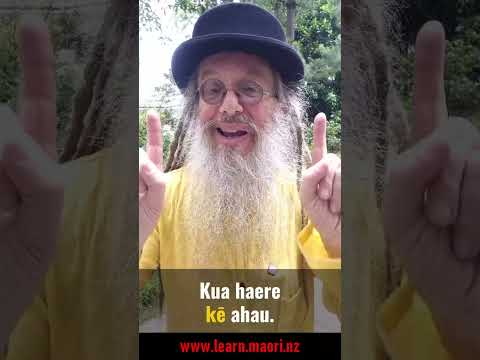
#183: All the particles in the postposed periphery so far
ake, atu, iho, rawa, rawa atu, noa, pea, hoki, tonu, ranei, kāore rānei, katoa and aneke
These are particles in the postposed periphery: ake, atu, iho, rawa, rawa atu, kē, pea, hoki, tonu, rānei, kāore rānei, katoa, and anake. They modify verbs and adjectives to express direction, repetition, surprise, exclusivity, degree, and questions.