Te Reo Māori Videos!
Jump to:
ā (and)a as a personal particleactive sentencesadjectivesāhuaakeaku, ō, anaanekeatucategorising sentencescoloursconjunctionsdual pronounsēngarifamily relationshipsfuture tensegreetingshaerehehokii as a past tense markerihoi tei to indicate directioni to mark the object of the sentencekakai-katoakēkei teki to indicare directionki to mark the object of the sentencemaimātoumāuanounsobjects in a sentencepast tensepersonal pronounspluralspossessivespronounciationquestionsrāneirāuarawa atusubjects in a sentencetaku, tō, tanatāuatēnei, tēnā, tērā, ēnei, ēnā, ērātētahi, ētahitinotonu
ā (and)
#32: Rangi was sick but now he is well
conjunctions: ēngari, ā
A conjunction joins two phrases together to make a longer sentence. In te reo Māori, two common conjunctions are ā (and) and engari (but)
.
a as a personal particle
#28: Rangi is reading the book
a - personal particle

Using 'a' as a personal article before a name.
#29: I love you
use of a before personal pronouns

ki a au, ki a koe, but not ki a ahau.
active sentences
#13: That person is going
kei te with verbs
In Māori, kei te marks the present tense (action happening now). Verbs like oma (run) or waiata (sing) never change form—unlike English. The same structure forms questions (Kei te waiata koe?). Tense is shown by markers before the verb, not by altering the verb itself.
Kei te haere ahau.
Kei te oma ahau.
Kei te hīkoi ahau.
Kei te waiata ahau.
Kei te tū ahau.
Kei te noho ahau.
Kei te kai ahau.
Kei te ako ahau.
Kei te pānui ahau.
Kei te tuhituhi ahau.
Kei te tākaro ahau.
Kei te tangi ahau.
Kei te moe ahau.
Kei te patu ahau.
Kei te piki ahau.
Kei te kata ahau.
Kei te pakipaki ahau.
Kei te kite ahau.
#16: The dog is running
kei te + verb + noun
Simple sentences in the present tense with a verb and a noun as a subject.
Kei te haere te wahine.
Kei te haere te kōtiro.
#17: The big man is crying
nouns + adjectives

Simple sentences with a noun and an adjective. Unlike in English, the adjective follows the noun (the house big, the cer red). For example: "Kei te oma te tāne nui" (the big man is running).
Kei te tangi te tane nui.
Kei te waiata te wahine kaha.
Kei te auau te kurī kino.
Auau, kino
#159: Rangi ate the cake. The cake was eaten by Rangi. If was Rangi who ate the cake.
active, passive, agent emphatic and stative sentences

Te reo Māori has four structures: active (subject acts, object with i/ki), passive (object as subject, verb suffix, agent with e), agent-emphatic (highlights doer with nā/mā), and stative (no suffix, agent with i, subject affected). Tenses apply across all. Key difference: passive uses e, stative uses i for the agent.
#162: The children broke the window
active, passive and stative sentences

In Māori, pakaru (stative) takes the broken thing as subject, with the agent marked by i (e.g., Kua pakaru te matapihi i ngā tamariki). The active verb pākaru uses i for the object, while its passive form uses e and suffix -tia.
adjectives
#7: I'm good
kei te with adjectives

Kei te means "at the moment". It can be used with an adjective to say how you are now. "Kei te pai" means "at the moment, I am well", and "kei te ora koe" means "you are well now".
Kei te pai ahau.
Kei te pai au.
Kei te pai koe?
Kei te ora ia.
Kei te ngenge ahau.
#8: I'm tired
adjectives

What an adjective is. Kei te ora ahau (I am well(. Kei te ngenge ahau (I am tired).
Kei te ora ahau.
Kei te ngenge ahau.
Kei te kaha ahau.
Kei te wera ahau.
#10: You are all beautiful
koutou
More adjectives. Using koe with an adjective. Kei te ātaahua koe.
Personal pronouns: ahau, koe, koutou.
Kei te āwangawanga ahau.
Kei te whakamā ahau.
Kei te hōhā ahau.
Kei te ātaahua ahau.
Kei te pai koe.
Kei te ātaahua koutou.
Kei te hōhā koutou.
#11: I am hungry and tired
hiakai, hiamoe

Kei te hiamoe ahau.
Kei te hiakai ngā tamariki.
Kei te hiainu te kurī.
#17: The big man is crying
nouns + adjectives
Simple sentences with a noun and an adjective. Unlike in English, the adjective follows the noun (the house big, the cer red). For example: "Kei te oma te tāne nui" (the big man is running).
Kei te tangi te tane nui.
Kei te waiata te wahine kaha.
Kei te auau te kurī kino.
Auau, kino
#172: The bad big wolf
Two adjectives for the same thing

In Māori, adjectives cannot precede a noun in a string. Instead, repeat the noun or use mea ("thing") to avoid repetition: He kurī pango, he mea nui (the black dog, the big thing). For a second adjective, add hoki ("also"): He tangata mōmona, māngere hoki ia (a fat, lazy man).
āhua
#9: I'm very sick
tino, āhua

Use of tino and ahua to mean "very" and "somewhat".
"Kei te tino pai" means "I am very well and "Kei te āhua ora koe" means "you are somewhat well".
Kei te tino pai ahau.
Kei te āhua pai ahau.
Kei te tino māuiui ia
Kei te āhua māuiui ia.
ake
#15: I'm coming. You're going.
haere mai, haere atu

Direction markers: ake (up), atu (away), iho (down) and mai (towards the speaker).
#173: Trump is more bad than Obama
ake, atu, iho
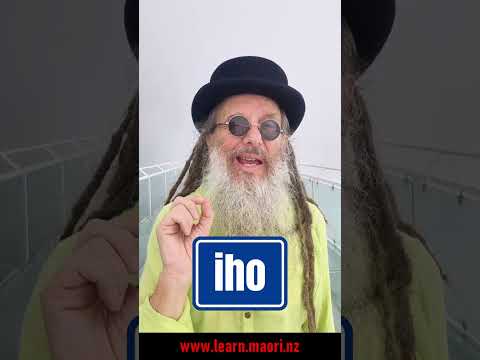
Comparatives use ake (up) for “more” (better/bigger) and iho (down) for “less/smaller/worse”. Use i to introduce the thing compared. Note: kino ake is common for “worse”, but strictly it’s kino iho—though this can sound ambiguous, so rephrasing is safer.
aku, ō, ana
#43: We are going to his house
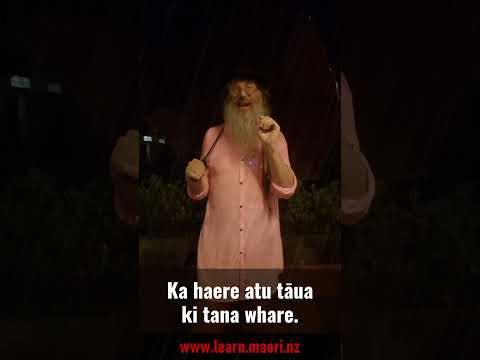
Neutral plural possessives: aku, o and ana.
aneke
#179: All the children only the lollies
anake, katoa
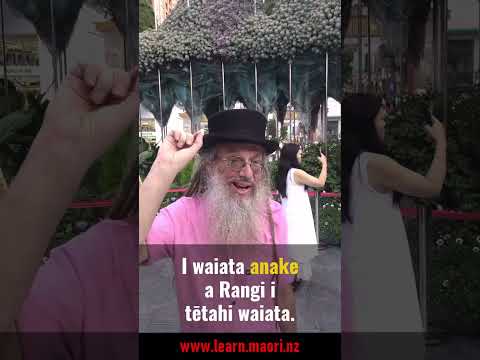
"Anake" means "alone" or "only" and directly follows the word it modifies. Moving it changes meaning (e.g., "only sang" vs. "only Rangi" vs. "only one song"). It contrasts with "katoa" (all), as shown in examples like "only the women worked" versus "all the women worked."
atu
#15: I'm coming. You're going.
haere mai, haere atu
Direction markers: ake (up), atu (away), iho (down) and mai (towards the speaker).
#173: Trump is more bad than Obama
ake, atu, iho
Comparatives use ake (up) for “more” (better/bigger) and iho (down) for “less/smaller/worse”. Use i to introduce the thing compared. Note: kino ake is common for “worse”, but strictly it’s kino iho—though this can sound ambiguous, so rephrasing is safer.
categorising sentences
#39: This is a motorbike
categorizing sentences with "he"

Sentences that start with he are called "categorizing sentences" and put something into a class or category. For example "he pene tēnei" means "this is a pen", or, literally "in the category of pen this is".
#40: Rangi is sad now but is a happy person
the difference between kei te to show temporary situation and he to show characteristic
colours
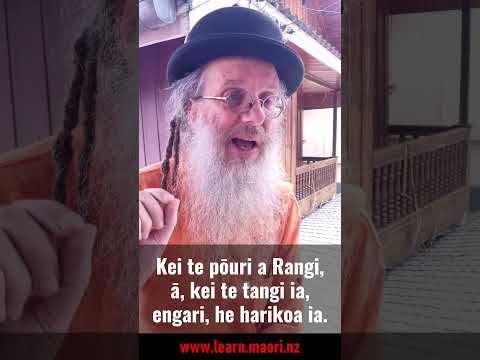
#41: That motorbike is yellow
colours
conjunctions
#32: Rangi was sick but now he is well
conjunctions: ēngari, ā
A conjunction joins two phrases together to make a longer sentence. In te reo Māori, two common conjunctions are ā (and) and engari (but)
.
dual pronouns
#30: We two (not you) are going
māua, tāua, rāua

Dual pronouncs: me, not you; you and me, those two, you two.
ēngari
#32: Rangi was sick but now he is well
conjunctions: ēngari, ā
A conjunction joins two phrases together to make a longer sentence. In te reo Māori, two common conjunctions are ā (and) and engari (but)
.
family relationships
#44: The brother was walking to the sister
Older and younger siblings, brothers and sisters

future tense
#34: The students listened and learned
ka as a future tense marker
greetings
#1: Hello
kia ora

You can say hello to someone say "kia ora".
"Kia" is a mild imperative or a command, encouraging someone to be a certain way. Ora is the world for healthy or well, and so "kia ora" means "may you be well!"
Kia ora!
Kia kaha!
#2: Hello friend!
kia ora e hoa

In Māori, e is a particle of address used when speaking directly to someone, so you say Kia ora e hoa! (Hello friend!), not Kia ora hoa. Particles like e are small but tricky words with multiple meanings depending on context, making them a key challenge in learning te reo.
Kia ora e hoa!
E tū!
E noho!
E koro.
E kui.
E whaea.
E tama.
E hine.
E kō.
E kare.
#3: Hello friends!
kia ora e hoa mā
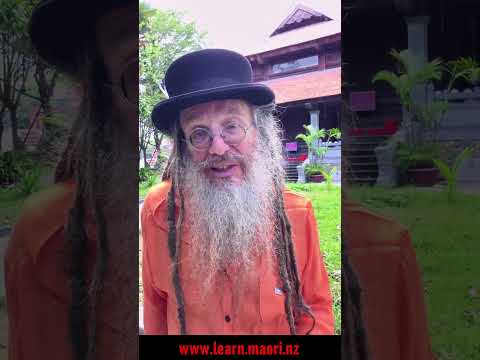
Greeting more than one person using mā.
Kia ora e hoa mā!
Kia ora tamariki mā!
#4: Hello sir!
tēnā koe

Use of tēnā koe as a more formal greeting than kia ora.
Tēnā koe!
Tēnā koutou.
Tēnā koutout katoa.
#5: Hello to all of you!
koutou

The plural personal pronoun koutou.
Tēnā koutou!
#6: Goodbye!
haere rā, e noho rā

Saying goodbye - if you are leaving or staying.
Haere rā!
E noho rā!
haere
#15: I'm coming. You're going.
haere mai, haere atu
Direction markers: ake (up), atu (away), iho (down) and mai (towards the speaker).
he
#39: This is a motorbike
categorizing sentences with "he"
Sentences that start with he are called "categorizing sentences" and put something into a class or category. For example "he pene tēnei" means "this is a pen", or, literally "in the category of pen this is".
#40: Rangi is sad now but is a happy person
the difference between kei te to show temporary situation and he to show characteristic
#45: I have a cup of tea
Possession using he... taku

In te reo Māori, He X ahau means “I am X,” not “I have X.”
To say “I have,” you must use possessives like tāku (one thing) and āku (more than one).
Some people and family words also change in the plural by lengthening the vowel, like tuakana → tuākana.
hoki
#177: The really happy fish will indeed return
hoki

When hoki means "also" or "and," it always comes immediately after the word or phrase it adds to the statement. It can follow nouns to include an additional person or thing, verbs to add an extra action, adjectives to add another quality, or even entire clauses to connect related ideas. In every case, hoki simply attaches to whatever is being included, making it a versatile way to say "too" or "as well" across all parts of speech.
i as a past tense marker
#31: The family were playing the game
past tense using i and i te
iho
#15: I'm coming. You're going.
haere mai, haere atu
Direction markers: ake (up), atu (away), iho (down) and mai (towards the speaker).
#173: Trump is more bad than Obama
ake, atu, iho
Comparatives use ake (up) for “more” (better/bigger) and iho (down) for “less/smaller/worse”. Use i to introduce the thing compared. Note: kino ake is common for “worse”, but strictly it’s kino iho—though this can sound ambiguous, so rephrasing is safer.
i te
#31: The family were playing the game
past tense using i and i te
#33: I am going, I was going, I went.
past tense: i te

i to indicate direction
#23: The children are running from the house to the school
i to Indicate direction from
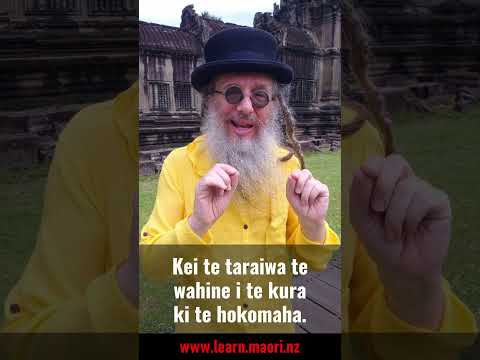
Indicating direction from using i.
Kei te hīkoi ahau i te whare ki te toa.
Kei te taraiwa te wahine i te kura ki te hokomaha.
#26: The children are running in or through the house
i meanig in or through or by

#27: I am reading the book to the children in the house
i and ki in the same sentence

We can have both i and ki in the same sentence. (I am reading the book to the children, the woman is singing the song to the people.)
Kei te pānui ahau i te pukapuka ki ngā tamariki i te ruma moe.
Kei te waiata te wahone i te waiata ki ngā tāngata i te whare.
i to mark the object of the sentence
#24: I am reading the book
i to identify the object of the sentence

The object of a sentence (a book being read, a cake being eaten) is marked by "i" in a sentence.
Kei te kai ahau i te keke.
Kei te pānui a Rangi i te pukapuka.
ka
#34: The students listened and learned
ka as a future tense marker
#35: The children played and then they learned
ka as a past tense marker
kai-
#165: The person who causes things to come and go
whaka and kai as suffixes
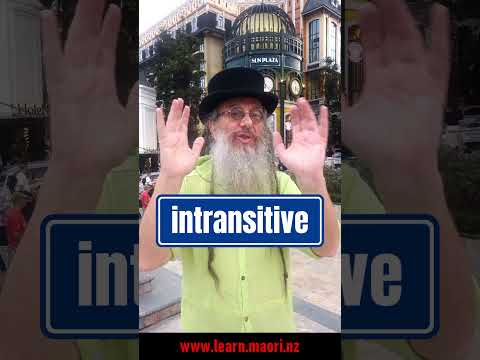
In Māori, prefix whaka adds 'cause to be/do' or 'turn into' to adjectives, statives, verbs, and nouns (whakaora = heal; whakakōwhatu = petrify). Prefix kai marks a doer (kaiako = teacher). Combined kaiwhaka- means 'one who causes' (kaiwhakahaere = manager; kaiwhakawhānau = midwife).
katoa
#10: You are all beautiful
koutou
More adjectives. Using koe with an adjective. Kei te ātaahua koe.
Personal pronouns: ahau, koe, koutou.
Kei te āwangawanga ahau.
Kei te whakamā ahau.
Kei te hōhā ahau.
Kei te ātaahua ahau.
Kei te pai koe.
Kei te ātaahua koutou.
Kei te hōhā koutou.
#179: All the children only the lollies
anake, katoa
"Anake" means "alone" or "only" and directly follows the word it modifies. Moving it changes meaning (e.g., "only sang" vs. "only Rangi" vs. "only one song"). It contrasts with "katoa" (all), as shown in examples like "only the women worked" versus "all the women worked."
kē
#180: Your hair is weird
kē

The Māori particle "kē" marks deviation from expectations in four ways: unexpected timing ("already"), contrary action ("instead"), surprising categorization (e.g., unusual strength), or departure from the norm (strange/extraordinary). Its translation depends on context—ranging from neutral surprise to compliment or mild criticism.
kei te
#7: I'm good
kei te with adjectives
Kei te means "at the moment". It can be used with an adjective to say how you are now. "Kei te pai" means "at the moment, I am well", and "kei te ora koe" means "you are well now".
Kei te pai ahau.
Kei te pai au.
Kei te pai koe?
Kei te ora ia.
Kei te ngenge ahau.
#13: That person is going
kei te with verbs
In Māori, kei te marks the present tense (action happening now). Verbs like oma (run) or waiata (sing) never change form—unlike English. The same structure forms questions (Kei te waiata koe?). Tense is shown by markers before the verb, not by altering the verb itself.
Kei te haere ahau.
Kei te oma ahau.
Kei te hīkoi ahau.
Kei te waiata ahau.
Kei te tū ahau.
Kei te noho ahau.
Kei te kai ahau.
Kei te ako ahau.
Kei te pānui ahau.
Kei te tuhituhi ahau.
Kei te tākaro ahau.
Kei te tangi ahau.
Kei te moe ahau.
Kei te patu ahau.
Kei te piki ahau.
Kei te kata ahau.
Kei te pakipaki ahau.
Kei te kite ahau.
#15: I'm coming. You're going.
haere mai, haere atu
Direction markers: ake (up), atu (away), iho (down) and mai (towards the speaker).
#16: The dog is running
kei te + verb + noun
Simple sentences in the present tense with a verb and a noun as a subject.
Kei te haere te wahine.
Kei te haere te kōtiro.
#17: The big man is crying
nouns + adjectives
Simple sentences with a noun and an adjective. Unlike in English, the adjective follows the noun (the house big, the cer red). For example: "Kei te oma te tāne nui" (the big man is running).
Kei te tangi te tane nui.
Kei te waiata te wahine kaha.
Kei te auau te kurī kino.
Auau, kino
#24: I am reading the book
i to identify the object of the sentence
The object of a sentence (a book being read, a cake being eaten) is marked by "i" in a sentence.
Kei te kai ahau i te keke.
Kei te pānui a Rangi i te pukapuka.
#40: Rangi is sad now but is a happy person
the difference between kei te to show temporary situation and he to show characteristic
ki to indicare direction
#22: The bird is flying to the tree
ki to indicate direction towards

Using ki to indicate direction.
Kei te haere ahau ki te toa.
Kei te hīkoi ahau ki te hokomaha.
Kei te taraiwa ahau ki te tāone.
#27: I am reading the book to the children in the house
i and ki in the same sentence
We can have both i and ki in the same sentence. (I am reading the book to the children, the woman is singing the song to the people.)
Kei te pānui ahau i te pukapuka ki ngā tamariki i te ruma moe.
Kei te waiata te wahone i te waiata ki ngā tāngata i te whare.
ki to mark the object of the sentence
#25: I love the woman
ki to identify the object of the sentence

Some verbs, such as arohoa, take "ki".
Kei te aroha te whaea ki tāna tamaiti.
mai
#15: I'm coming. You're going.
haere mai, haere atu
Direction markers: ake (up), atu (away), iho (down) and mai (towards the speaker).
mātou
#14: I'm not crying. You're crying.
koutou, rātou, rātou, mātou

Plural personal pronouns, including "us but not you".
māua
#14: I'm not crying. You're crying.
koutou, rātou, rātou, mātou
Plural personal pronouns, including "us but not you".
#30: We two (not you) are going
māua, tāua, rāua
Dual pronouncs: me, not you; you and me, those two, you two.
nouns
#16: The dog is running
kei te + verb + noun
Simple sentences in the present tense with a verb and a noun as a subject.
Kei te haere te wahine.
Kei te haere te kōtiro.
objects in a sentence
#22: The bird is flying to the tree
ki to indicate direction towards
Using ki to indicate direction.
Kei te haere ahau ki te toa.
Kei te hīkoi ahau ki te hokomaha.
Kei te taraiwa ahau ki te tāone.
#24: I am reading the book
i to identify the object of the sentence
The object of a sentence (a book being read, a cake being eaten) is marked by "i" in a sentence.
Kei te kai ahau i te keke.
Kei te pānui a Rangi i te pukapuka.
#25: I love the woman
ki to identify the object of the sentence
Some verbs, such as arohoa, take "ki".
Kei te aroha te whaea ki tāna tamaiti.
past tense
#31: The family were playing the game
past tense using i and i te
#33: I am going, I was going, I went.
past tense: i te
#37: I have danced
kua

The tense marker kua is translated with "has" or "have".
personal pronouns
#5: Hello to all of you!
koutou
The plural personal pronoun koutou.
Tēnā koutou!
#14: I'm not crying. You're crying.
koutou, rātou, rātou, mātou
Plural personal pronouns, including "us but not you".
plurals
#18: The sheep are standing
plurals
Usually, nouns don't change in the plural.
#20: The women are singing
plural nouns like wāhine
A handful of words change their forms in Māori by lengthening the vowel: wahine becomes wāhine.
#21: The happy children are playing
tamariki as a plural
A handful of words change slightly in the plural (eg, wahine becomes wāhine). The exception to the rule that words in Māori don't change in the plural is the word for child (tamaiti) which because tamariki is plural.
#43: We are going to his house
Neutral plural possessives: aku, o and ana.
possessives
#42: I am eating your apple, you are eating my apple
neuter singular possessives: taku, tō, tana

How to say "my", "your" and "his/her".
#43: We are going to his house
Neutral plural possessives: aku, o and ana.
#45: I have a cup of tea
Possession using he... taku
In te reo Māori, He X ahau means “I am X,” not “I have X.”
To say “I have,” you must use possessives like tāku (one thing) and āku (more than one).
Some people and family words also change in the plural by lengthening the vowel, like tuakana → tuākana.
pronounciation
#19: Your armpit smells delicious
pronunciation - keke vs kēkē
Māori pronunciation.
questions
#12: How are you?
Kei te pēhea koe?

The question "how are you? Kei te pēhea koe?"
And you? Me koe?
Āe, kao, auē!
Kei te pēhea koe?
Me koe?
Kei te pēhea ia?
rānei
#175: Are you a man or a mouse?
rānei
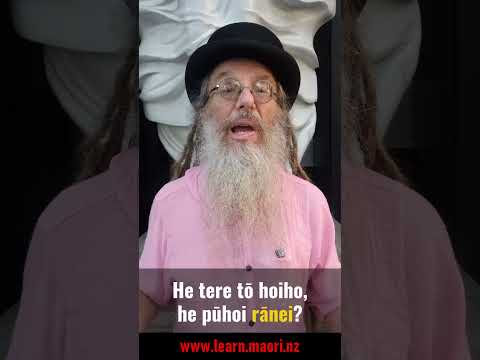
Rānei means "or", but unlike in English,it is placed after the final listed option. It handles multiple choices and, with a single option, turns statements into emphatic yes/no questions (implying "or not"). It works in negative forms too. Its core role is marking direct, choice-focused questions.
#176: Have you read the book, or not?
ranei, kaore rānei, ehara rānei

In Māori, rānei forms questions; its placement shifts emphasis (action, subject, or object). Kāore rānei means "or not". Ehara rānei asks negative questions. Crucially, answering "yes" agrees with the negative statement ("I have not"), while "no" contradicts it ("I have").
rāua
#30: We two (not you) are going
māua, tāua, rāua
Dual pronouncs: me, not you; you and me, those two, you two.
rawa atu
#174: You cat is too fat
rawa atu

Use tino before an adjective for "very"; rawa after for "too/excessively". Combine tino...rawa for "very exceedingly". Comparatives use ake...i ("than"). Superlatives use rawa atu ("the most"). Adding tino before rawa atu intensifies to "absolutely amazing".
subjects in a sentence
#16: The dog is running
kei te + verb + noun
Simple sentences in the present tense with a verb and a noun as a subject.
Kei te haere te wahine.
Kei te haere te kōtiro.
#17: The big man is crying
nouns + adjectives
Simple sentences with a noun and an adjective. Unlike in English, the adjective follows the noun (the house big, the cer red). For example: "Kei te oma te tāne nui" (the big man is running).
Kei te tangi te tane nui.
Kei te waiata te wahine kaha.
Kei te auau te kurī kino.
Auau, kino
taku, tō, tana
#42: I am eating your apple, you are eating my apple
neuter singular possessives: taku, tō, tana
How to say "my", "your" and "his/her".
tāua
#30: We two (not you) are going
māua, tāua, rāua
Dual pronouncs: me, not you; you and me, those two, you two.
tēnei, tēnā, tērā, ēnei, ēnā, ērā
#38: Those birds near you are beautiful
tēnei, tēnā, tērā, ēnei, ēnā, ērā

Instead of using "the" or "a", we can use words like "this" or "those". In te reo Māori we have tēnei (this near me), tēnā (that near you) and tērā (that over there) amd the plurals ēnei, ēnā and ērā.
tētahi, ētahi
#36: A police offer chased a thief
tētahi and ētahi

"a" and "some"
tino
#9: I'm very sick
tino, āhua
Use of tino and ahua to mean "very" and "somewhat".
"Kei te tino pai" means "I am very well and "Kei te āhua ora koe" means "you are somewhat well".
Kei te tino pai ahau.
Kei te āhua pai ahau.
Kei te tino māuiui ia
Kei te āhua māuiui ia.
tonu
#178: She immediately cried and is still crying.
tonu

Tonu means 'still/continuously' with tense markers like kei te (kei te mahi tonu – still working). Without a tense marker in past narratives, it means 'immediately' (haere tonu – immediately went). Paired as rite tonu... ki, it means 'just like' for comparisons (rite tonu ki te tia – like a deer).